A PCB assembly reaches final inspection and is sent back for correction. A component is missing, a solder joint needs attention or a connection is incorrect. The failure appears at the quality station but the original cause may have started much earlier at the operator workstation.
Poor lighting, tools outside the normal reach zone, unorganised components, incorrect storage, operator fatigue, cable clutter and incomplete ESD protection can make work less consistent. To reduce rework in electronics manufacturing, the physical workspace should be reviewed along with training, process controls and machine settings.
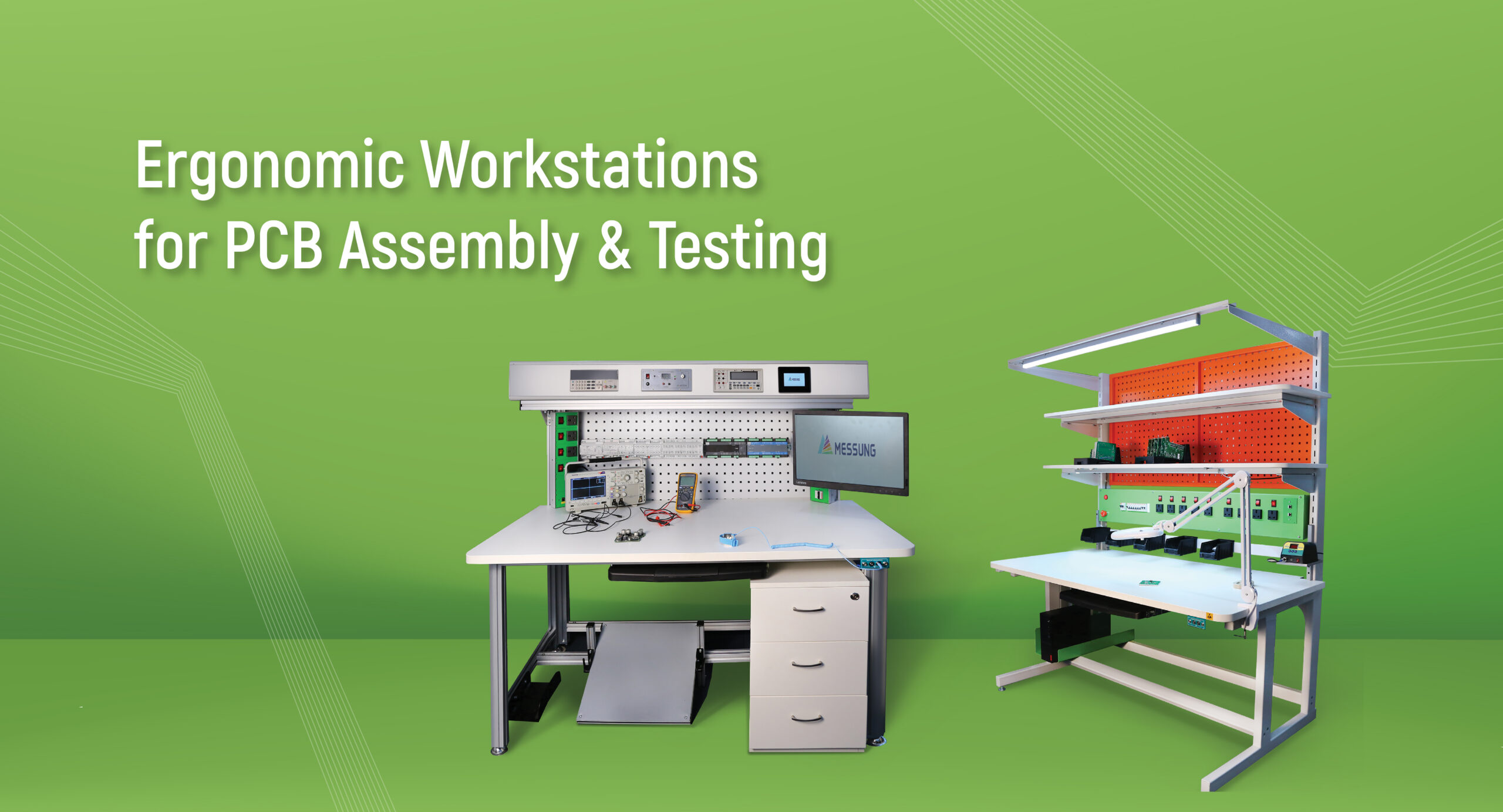
Messung Workplace Technology develops ESD safe, ergonomic, modular and process specific workplace systems for assembly, testing, inspection and laboratory applications. Manufacturers can explore Messung ESD and industrial workstation solutions when reviewing an existing line or planning a new facility.
Better workstation design reduces avoidable rework by improving ESD control, operator ergonomics, task visibility, tool access, component organisation and material movement.
An electronics manufacturing workstation is a purpose designed work area that brings together the work surface, ESD controls, tools, utilities, lighting, storage and operator seating required for assembly, inspection, testing or repair.
Rework commonly results from electronics assembly errors, ESD damage, incorrect components, poor inspection conditions, handling mistakes, inaccessible tools and inconsistent operator processes.
Incorrect component placement, loose connections, poor soldering, wrong tool settings, handling damage and missed inspection steps can all send an assembly back for correction. Poor communication between assembly and testing areas can make the problem harder to identify.
The workstation is where operators, components, tools, instructions, power and testing equipment come together.
A poor workstation layout creates more searching, reaching, turning and handling. These interruptions can lead to material handling errors and make the assembly process less consistent, even when the operator understands the task.
Better workstation design reduces rework by arranging tools, components, power, lighting, instructions and storage around the actual assembly process.
Incoming parts completed assemblies and rejected items should have clearly defined locations. Tools should remain visible, inspection equipment should be accessible, and cables should not obstruct the work surface.
The electronics assembly workstation should reflect the actual order of work.
Frequently used components should be placed closest to the operator. Work instructions and inspection tools should remain visible. Completed assemblies should move into a clearly identified outgoing zone.
This layout supports process consistency by helping the operator follow the same sequence for each assembly.
ESD control helps prevent damage to static sensitive components during assembly, testing, inspection, storage and movement.
A complete ESD workstation may include an ESD work surface, grounding points, wrist strap connections, ESD chairs or stools, drawer cabinets, trolleys, compatible tools and operator grounding practices.
An ESD mat placed on a regular table does not automatically create a complete controlled workstation.
Messung product literature specifies an ESD resistance range of 10⁶ to 10⁷ ohms and refers to IEC 61340 5 1 and ANSI ESD S20.20.2021 across its ESD workplace range.
Manufacturers reviewing electronics production quality may also read how poor ESD workstations increase manufacturing costs and why ESD damage can remain hidden
Protection can fail when a PCB leaves an ESD workbench and is placed in a regular drawer or moved on a general purpose trolley.
The ESD path should continue through workstations, seating, storage, movement and operator practices. Every stage should support the facility’s ESD control plan.
Yes. Poor ergonomics can increase fatigue, discomfort, awkward posture and loss of concentration, which may affect assembly consistency.
Workstation ergonomics includes correct work height, adjustable seating, back support, foot support, clear leg space, comfortable reach zones, monitor position and task visibility.
A well planned workspace also reduces repeated twisting and bending during precision assembly work.
Fatigue can affect concentration, hand movement, visual inspection and process discipline.
An operator who repeatedly reaches behind the workstation for a tool or bends towards a low shelf adds unnecessary movement to every assembly cycle. Over time, these movements can make it harder to maintain the same level of attention.
Read more about how ergonomic workstations support operator productivity.
Good task lighting helps operators see component placement, solder joints, markings, connector alignment and visible defects more clearly.
General factory lighting illuminates the production area. Focused workstation lighting supports the specific assembly or inspection task.
A PCB assembly workstation may also need reduced shadows, controlled glare, visible work instructions, consistent illumination and magnification support.
Selected Messung ESD workstation ranges include LED lighting and provisions for magnifying glasses, monitor arms, keyboard trays and other accessories, depending on the model and configuration.
Organised storage and controlled material flow reduce the chance of using the wrong component, mixing batches, damaging parts or losing tools during production.
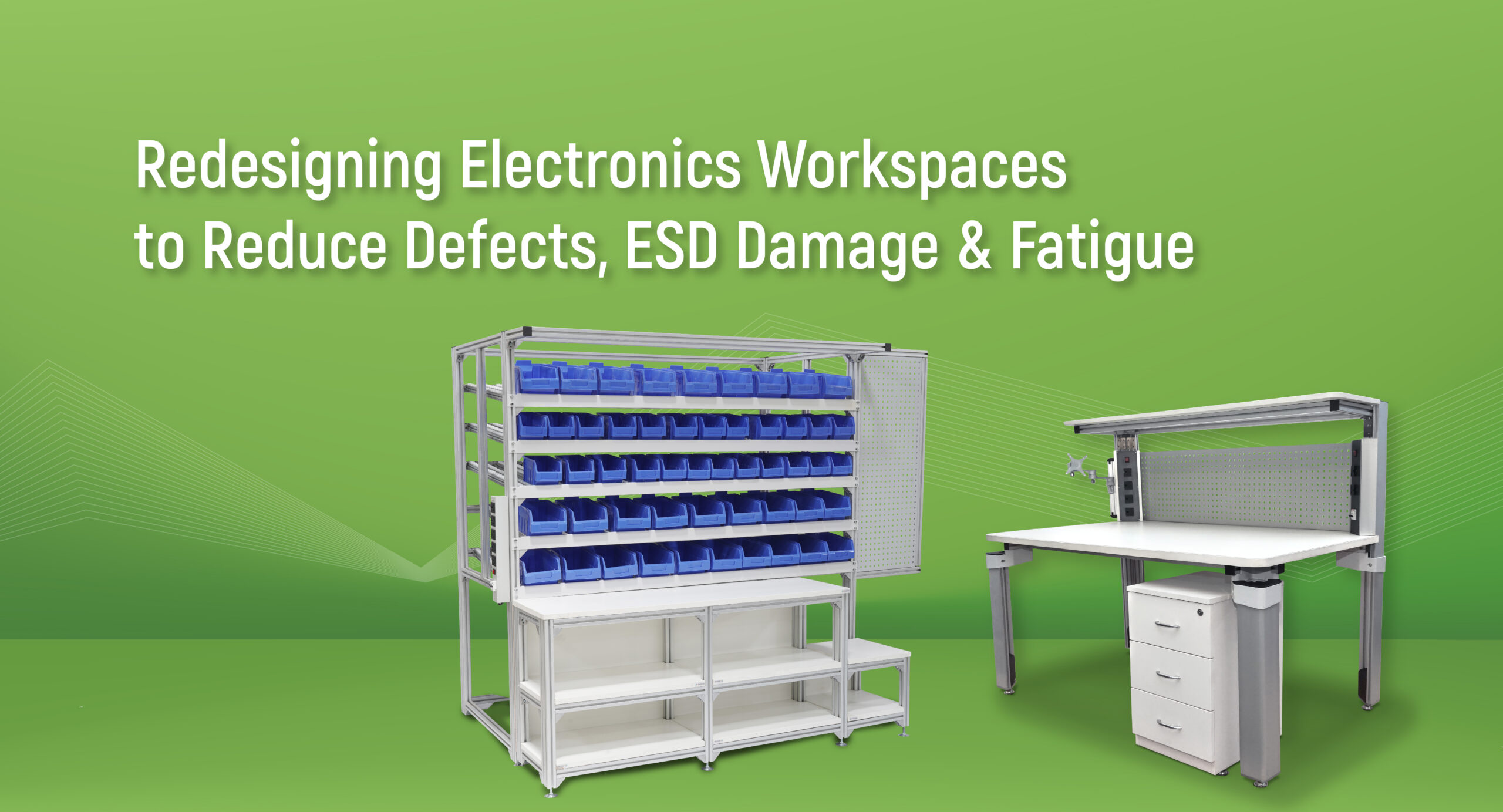
Useful arrangements may include component bins within reach, dedicated storage for sensitive items, ESD drawer cabinets, mobile ESD trolleys, tool storage and FIFO racks where stock rotation matters.
Accepted and rejected parts should remain clearly separated. Incoming components and completed assemblies should also have defined movement zones.
Every unnecessary movement creates another handling point.
When PCBs move from assembly to inspection and then testing, an ESD trolley or mobile test bench can support controlled movement between these areas.
Messung’s AFM MTB mobile test bench includes ESD shelves, ESD drawers, ESD castors, electrical housing and configurable storage options for movement and testing applications.
Modular workstations help manufacturers adjust the workspace when products, tools, production volumes or inspection requirements change.
Fixed furniture can become unsuitable when a new product line or testing process is introduced.
Modular industrial workstation design can support adjustable shelves, accessory panels, monitor arms, tool rails, drawer modules, power access, lighting and storage expansion without replacing the complete workstation.
This allows the workspace to change while preserving an organised and repeatable process.
Common mistakes include using generic tables, incomplete ESD protection, poor lighting, distant storage, incorrect work height, cable clutter and layouts that do not match the assembly process.
Other mistakes include:
These issues can weaken manufacturing quality control by making correct work more difficult to repeat.
Manufacturers should review existing workstations by observing the actual process, operator movement, component flow, ESD controls, storage, lighting and recurring quality issues.
Workstation Review Checklist
Operator feedback should also be included. Operators often notice repeated movement, poor access and storage problems that are not visible in a layout drawing.
Messung Workplace Technology supports manufacturers by designing ESD-safe, ergonomic, modular and process-specific workplace systems.
Depending on the application, the solution may include:
Messung studies operator movement, material flow, utilities, storage, ESD requirements, available space and future expansion before recommending a configuration.
The workstation is therefore treated as part of the production process rather than as an isolated table.
The PCB from the opening example was corrected at the quality station, but the opportunity to prevent the error began much earlier at the operator workstation.
Better workstation design supports ESD protection, ergonomics, task visibility, organisation, material flow and repeatable assembly practices. It cannot remove every cause of rework, but it can reduce avoidable errors linked to poor workplace planning.
Rework reduction should therefore include a review of the complete work area, not only the operator, component or machine.
Planning to reduce avoidable rework in your electronics manufacturing facility? Explore Messung workplace solutions for electronics manufacturing designed around your process, operator movement, storage needs and future expansion plans.
No. Rework can have several causes, including process, component, machine, inspection and training issues. Better workstation design helps reduce avoidable errors linked to ESD control, ergonomics, visibility, organisation and material handling.
An ESD workstation helps protect static sensitive components through compatible surfaces, grounding, seating, storage, accessories and operator controls. It can also support a more organised and repeatable assembly process.
Yes. Poor posture, repeated reaching, discomfort and fatigue can affect concentration and consistency during precision assembly tasks. Ergonomic planning helps reduce unnecessary movement and supports a more comfortable working position.
No. An ESD mat is only one part of a complete ESD controlled workstation. Seating, grounding, storage, movement, accessories, compatible tools and operator practices should also support ESD protection.
Task lighting improves the visibility of small components, markings, solder joints, connectors and visible defects. It also helps reduce shadows across the work area during assembly and inspection.
Workstations should be reviewed when rework increases, operators report discomfort, product lines change, storage becomes cluttered or new tools and testing processes are introduced. Periodic reviews can also identify developing gaps before they affect the process.