An operator assembling PCBs may repeat the same movement hundreds of times before lunch. Reaching for tools, turning towards a test instrument, adjusting posture and stretching across the table can seem minor when viewed separately. By the end of a shift, however, these movements can affect comfort, concentration and consistency.
This is why an ergonomic electronics assembly workstation matters in electronics manufacturing. It is not simply a table with a chair. It is a planned work area that supports the operator, the task, the equipment and the flow of materials. When tools are within reach, lighting is suitable and the working height matches the activity, operators can spend more time on assembly and less time correcting their position or searching for what they need.
For companies planning new assembly, testing or laboratory areas, it is useful to explore Messung ergonomic workplace solutions while considering the complete process, not only the furniture.
An ergonomic workstation is a purpose built work area arranged to support comfortable posture, safe reach and efficient movement during a specific task.
In manufacturing, ergonomics means fitting the workstation to the operator and the process. A normal table provides a surface, while an industrial workstation also considers adjustable work height, reach zones, task lighting, seating, storage and equipment placement.
A well planned ergonomic workbench keeps tools close, positions instruments clearly and provides legroom for seated work.
Ergonomics matters because electronics work combines repetition, long hours and precision within a limited area.
PCB assembly, component insertion and inspection can require the same movements throughout the day. Poor tool placement adds extra reaching and turning to every cycle.
Incorrect work height, limited leg space or unsuitable seating can gradually increase discomfort and reduce attention during extended seated or standing work.
Soldering, testing and inspection require steady focus. Poor lighting, awkward viewing angles and clutter can make detailed work more difficult.
Manufacturers can improve productivity with ergonomic workstations by reducing unnecessary movement, supporting better workflow and helping operators maintain a consistent working position.
Better storage makes tools easier to find. Suitable lighting supports inspection, while organised utilities reduce interruptions.
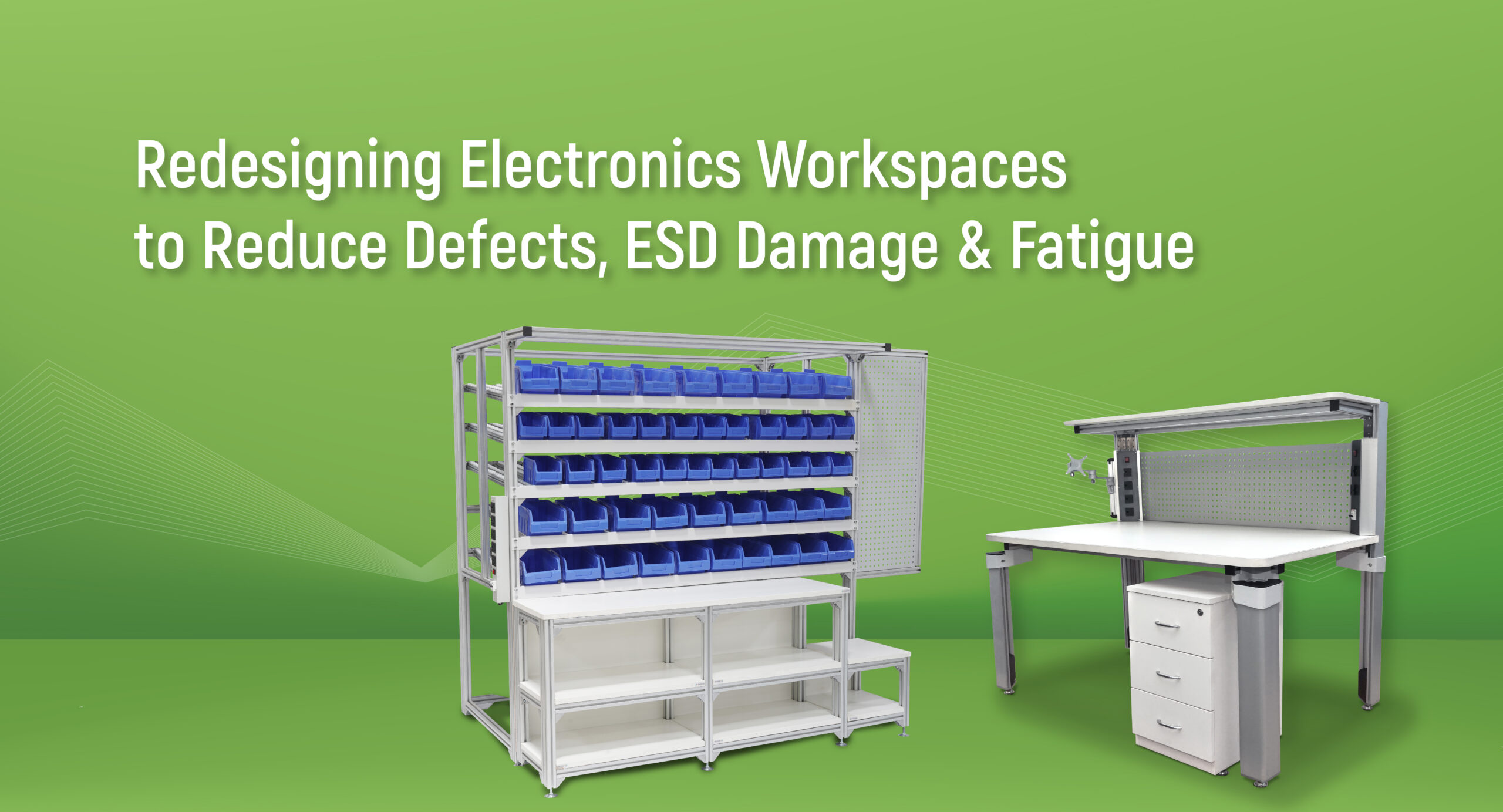
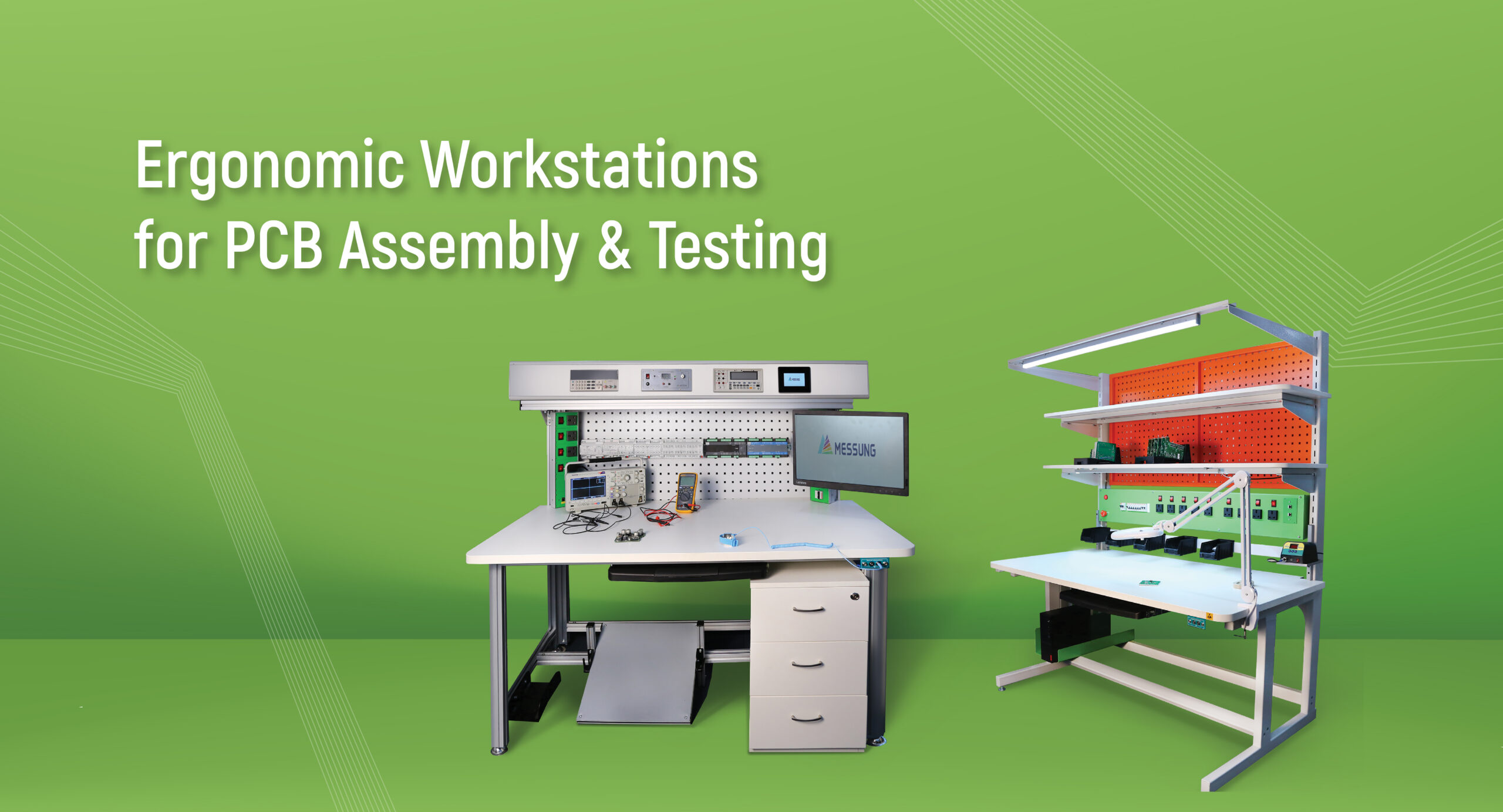
Messung offers different configurations for different production needs. AFM STYLE is an aluminium ESD workstation with lighting, an electrical mounting panel, an adjustable footrest and instrument mounting options. AFM HT provides adjustable height, lighting and accessory mounting provisions. AFM Champion SR uses a mild steel structure with adjustable shelves, a perforated panel, lighting and electrical integration. Each model supports a different electronics manufacturing workstation task.
A workstation becomes ergonomic when height, lighting, utilities, seating and storage support the operator and process.
Adjustable height supports seated or standing tasks. Integrated lighting improves visibility during assembly and inspection. An electrical mounting panel keeps sockets and controls in a planned area.
A footrest supports seated work, while a monitor arm and keyboard tray help position computer equipment. Shelves, drawer units and tool panels keep items within practical reach. Cable management helps preserve clear working space.
An ergonomic workstation design for PCB assembly may need a different arrangement from a testing bench or laboratory workstation.
Ergonomic chairs and stools support posture, movement and working height, especially during long periods at the workstation.
Chair height should match the work surface. Back support, a stable base and suitable movement also matter. For higher work surfaces, a foot ring provides leg support.
Messung AFM Leather Chairs include adjustable height and back support, synchronised movement, ESD casters and foot ring provision. AFM PU Chairs use PU integral foam for shop floor and assembly conditions, with adjustable height and back support. Champion Stools are available in standard and high formats with height adjustment, conductive casters or glides and a foot ring on the high model.
A laboratory chair or ESD chair should match the task, workstation height and ESD requirements.
Common ergonomic mistakes include poor lighting, incorrect work height, unsuitable seating, distant tools, inadequate storage and cable clutter.
A fixed table may force different operators to work at one height. Tools outside the normal reach area add movement to every cycle. Poor lighting can create shadows, while unsuitable seating may encourage awkward posture.
Equipment is also often added without reviewing the layout. Monitors, test instruments and storage gradually fill the surface, leaving too little clear working space
A complete ergonomic workspace combines the workstation, seating, storage, material movement and supporting equipment as one coordinated system.
The chair or stool should match the workstation height and task. Storage should keep tools and parts close without blocking the surface. An ESD trolley can support movement between stations, while a mobile test bench can bring instruments, screens, shelves and storage closer to the required location. FIFO racks can support organised material flow where first in and first out handling is needed. Messung’s AFM MTB mobile test bench includes provisions for a monitor arm, keyboard tray, electrical housing, adjustable shelves, storage and ESD castors.
Together, these elements create an industrial ergonomic workstation for assembly line work rather than unrelated products.
Companies reviewing layouts can explore ESD workplace solutions for assembly, testing and material movement
Ergonomics improves productivity by helping operators work with less unnecessary movement, better visibility and a more organised flow of tools and components. It also supports operator comfort, quality and consistent output during repetitive electronics assembly, testing and inspection.
Good workplace ergonomics is not about adding the most accessories. It is about configuring the workstation around the actual process, operator movement, equipment, available space and future needs. Work height, lighting, seating, storage and material movement should function together.
For electronics manufacturing, laboratory and testing environments, explore Messung Industrial and ESD workstation solutions and plan a workplace that supports both the operator and the task. A planned ergonomic workspace can help reduce operator fatigue in electronics manufacturing and support dependable daily performance.
An ergonomic workstation is designed around the operator and the task. It considers working height, reach, posture, lighting, seating, storage and equipment placement. In electronics manufacturing, it may also include ESD control and electrical integration.
Ergonomics can reduce unnecessary reaching, searching, bending and repositioning. When tools, components and equipment are arranged logically, operators can follow a smoother workflow and maintain more consistent output.
Electronics assembly often requires repetitive, precise work. Discomfort can distract attention and interrupt workflow. Good operator ergonomics helps maintain focus.
Useful features may include adjustable height, task lighting, electrical mounting, storage, monitor support, cable management, a footrest and compatible seating. The configuration should match the task.
Yes. An ergonomic workstation for electronics manufacturing can improve tool reach, lighting, seating and equipment placement. Where static-sensitive components are handled, an ergonomic ESD workstation should also support the wider ESD-controlled process.