Walk into an electronics assembly area and the difference between a planned workstation and a basic table setup is visible almost immediately. Operators may be reaching too far for components, searching for tools, managing loose cables, or moving between storage and assembly positions more often than necessary.
An effective electronics manufacturing workstation is not selected only on the basis of size or appearance. It is planned around the operator, the product, the assembly sequence, and the movement of material through the line. For a new EMS facility or an upgrade to an existing line, before finalising the layout.
The right combination of work surface, ESD protection, lighting, seating, storage, and utility access can improve daily workflow. It also helps create a workspace that remains useful when products, volumes, or process requirements change.
Electronics assembly involves small components, repeated movements, and precision work. Bare PCBs, sensors, connectors, controllers, and other assemblies can be sensitive to handling conditions. A poorly planned electronics assembly workstation can slow the operator, create clutter, and increase the chance of errors.
Production managers often focus on equipment selection, line balancing, and process documentation. All three are important. But the workstation is where the operator performs the task. If the work surface, storage, seating, and tools are not arranged around the actual process, the line can underperform even when the process plan is sound.
A well designed industrial workstation supports consistent work habits. It keeps frequently used items close to the operator, reduces unnecessary movement, and gives every tool, component, and assembly a defined place.
The common mistake is selecting workstations first and trying to fit the process around them later. A better approach is to study the process before specifying the workstation.
The study should consider what enters the station, what the operator does with it, which tools are required, where the completed assembly moves next, and how often each movement takes place. It should also look at operator reach, material replenishment, inspection points, and available floor space.
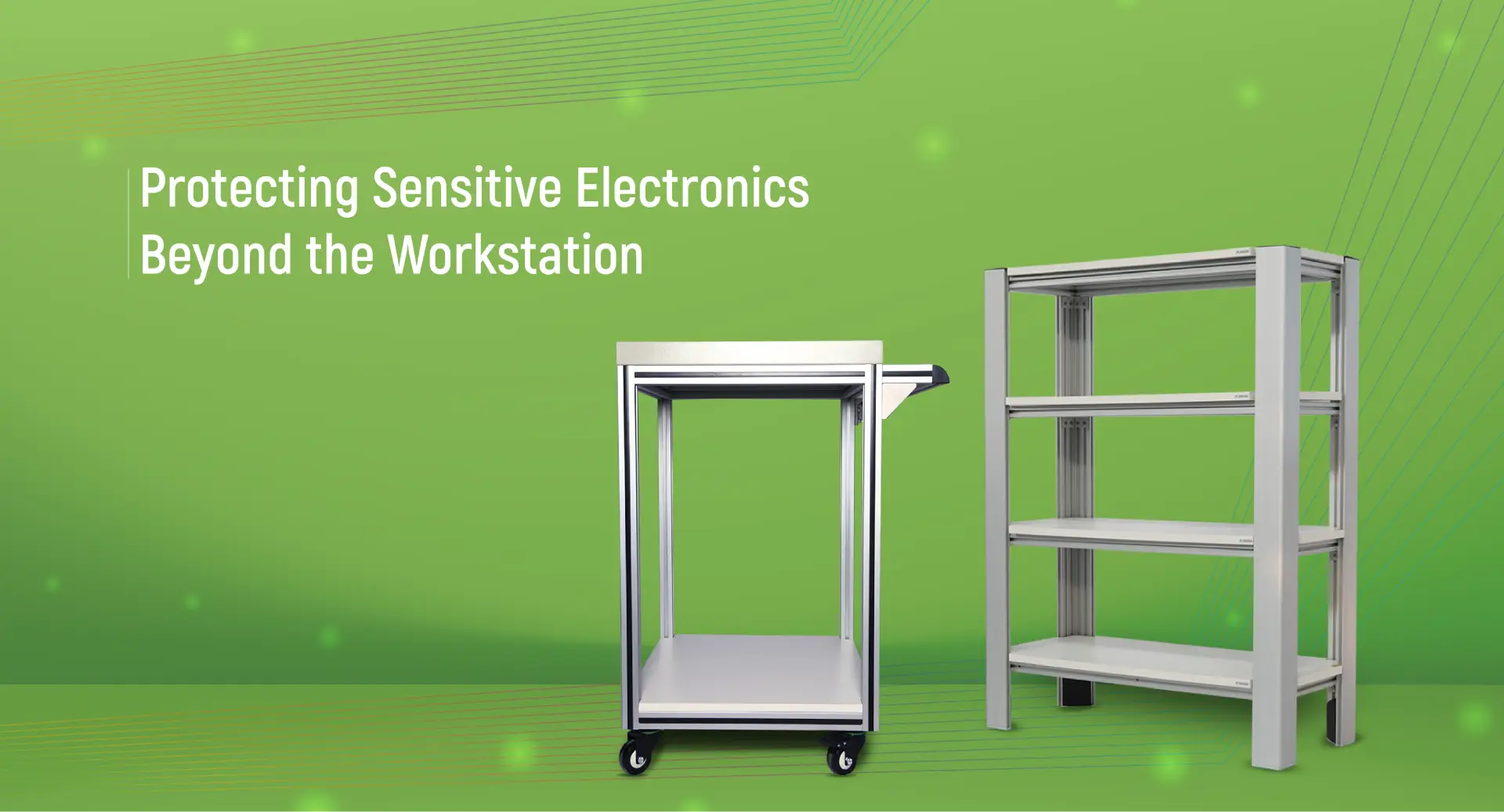
This helps identify where ESD drawer cabinets are required, where a mobile ESD trolley is more useful than fixed storage, and where a FIFO storage rack can support component rotation. It also helps decide whether a packaging station should be part of the assembly cell or located separately.
Messung Workplace Technology follows this process first approach. The objective is not to place products on a shop floor. It is to create a workspace that supports the actual production sequence.
An electronics manufacturing workstation must address several requirements at the same time. The best results come when these are planned together.
The work surface should match the task being performed. Fine pitch SMT rework needs a stable surface and suitable ESD dissipation properties. Heavier sub assembly work may need an industrial workbench designed for repeated tool contact and higher loads.
Surface selection is a process requirement. It should be based on the product, tools, handling method, and ESD sensitivity of the work being done.
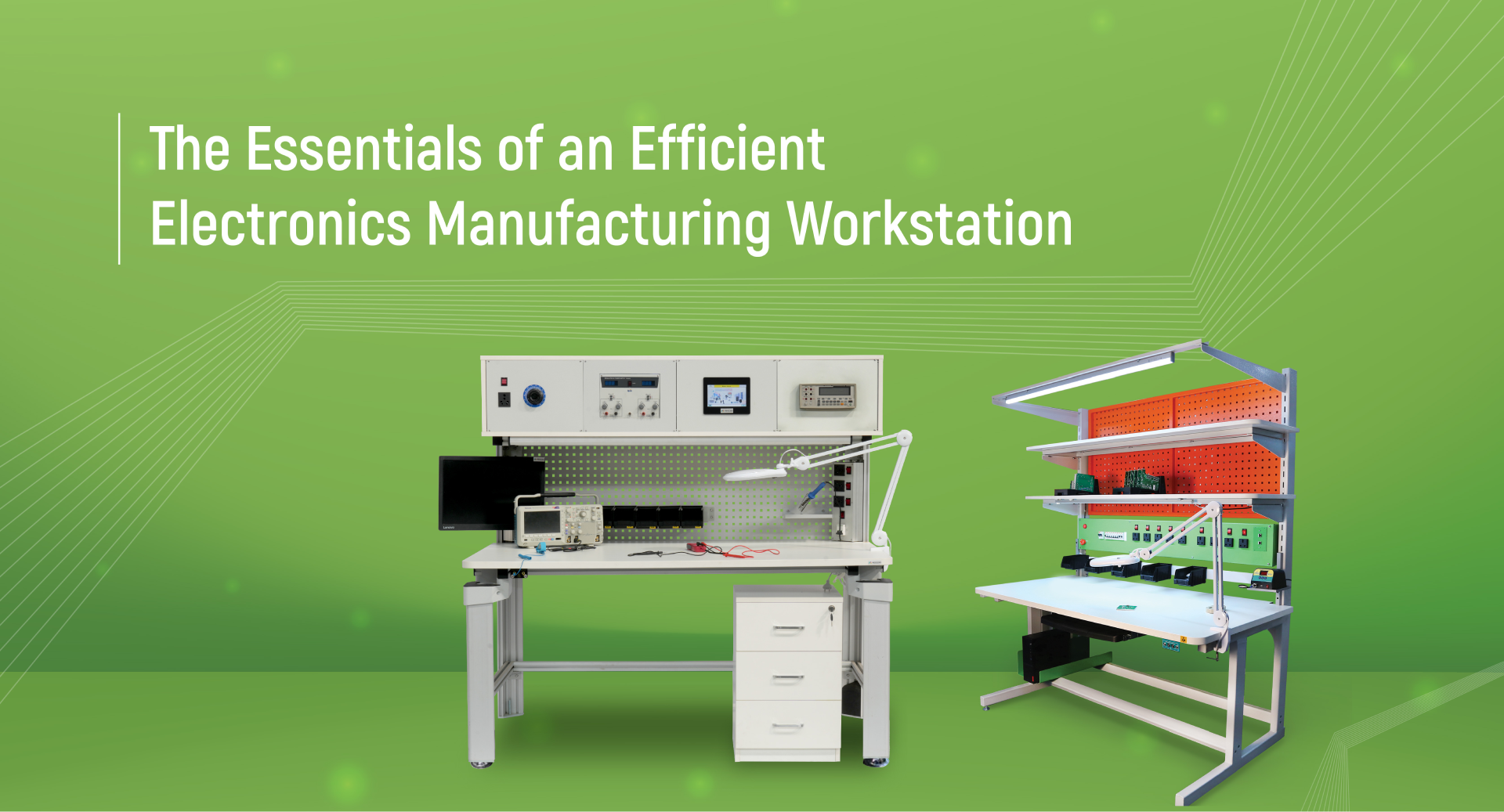
Soldering stations, screwdrivers, rework tools, barcode scanners, test instruments, and inspection equipment need power close to the point of use. Utility access should be planned around where the operator works, not added later as an afterthought.
Integrated power rails, cable routing, and utility provisions help keep the work area clear. They also make equipment easier to service and trace.
Electronics work often depends on visual inspection. Poor lighting can make it harder to spot solder defects, damaged connectors, incorrect component placement, or surface marks.
Task lighting placed directly over the work area improves visibility and helps reduce eye strain. The goal is consistent illumination without glare or shadows.
Tools, bins, fixtures, and components used repeatedly should sit within a comfortable reach zone. When operators have to bend, twist, or stretch for common items, the movement adds time to every cycle.
This is closely linked to lean manufacturing and 5S practices. Reducing unnecessary movement supports a more organised and repeatable work process.
Loose cables create a housekeeping issue and can become a safety concern. Integrated cable management helps maintain a clean workstation, supports 5S discipline, and makes future maintenance easier.
This decision should be made according to the process stage.
An ESD workstation is needed where bare PCBs, semiconductors, sensors, integrated circuits, or other static sensitive components are handled outside enclosed equipment. Typical areas include PCB assembly, rework, inspection, calibration, testing, and electronics packing.
An ESD workstation uses static dissipative or conductive surfaces, grounding points, and compatible accessories as part of one controlled system. for applications where static sensitive components are handled.
Non ESD workstations are suitable for mechanical assembly, cable harnessing, packaging of enclosed products, material preparation, and other stages where exposed static sensitive electronics are not present.
Many facilities need both. Applying ESD protection to every area may not be necessary, while failing to provide it at critical stages can create risk. Each station should be specified according to the work performed there.
Operator comfort is closely connected to consistency. An operator who is uncomfortable during a long shift may find it harder to maintain the same posture, focus, and handling accuracy.
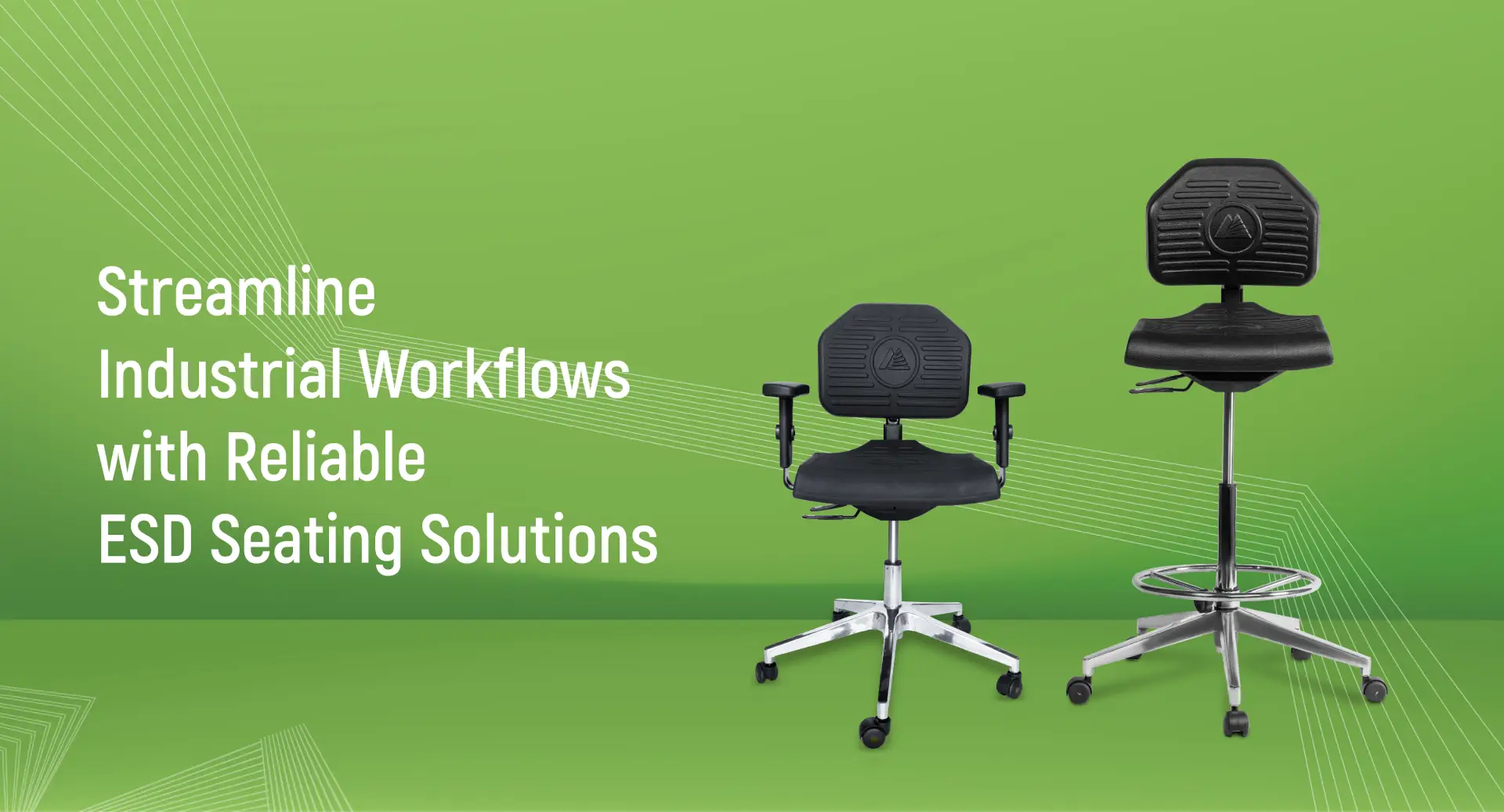
Laboratory chairs and laboratory stools should be selected based on task duration, working height, and operator movement. Height adjustable and ergonomic seating helps accommodate different users across shifts.
At ESD controlled stations, ESD chairs and stools should be used as part of the complete ESD setup. Standard seating may be suitable for non ESD areas, but it should not be mixed into an ESD controlled station.
A workstation is part of a larger material flow. Components arrive, are assembled or tested, and then move to the next stage. If storage and movement solution are not planned around the station, operators spend time searching, walking, and waiting.
Industrial storage cabinets can support tools, consumables, and larger items. ESD drawer cabinets are useful for sensitive electronic parts that need organised and protected storage close to the point of use.
An ESD trolley can move components between assembly, inspection, and testing areas while supporting ESD continuity. A FIFO storage rack can help manage inventory rotation where lot control, shelf life, or first in first out handling is important.
The aim is to create one connected workspace ecosystem. Workstations, storage, seating, and material movement solutions should support each other instead of being selected separately.
Product lines change. New SKUs are introduced, production volumes move up or down, and work instructions are revised. A fixed setup designed for one task can become restrictive when the process changes.
A modular lab setup uses standardised frames, work surfaces, and accessory mounts that can be adjusted or expanded. Shelves, monitor arms, task lighting, bin rails, and storage modules can be added later without replacing the base unit.
Planning for future expansion also means leaving enough space around stations for material movement, visual management boards, and additional accessories. Packing stations too tightly on day one can make later changes difficult.
A modular electronics assembly workstation gives the facility more flexibility without requiring a complete layout rebuild every time the process changes.
One common mistake is treating ESD as a general requirement instead of specifying it by process stage. This can lead to unnecessary spending in some areas and insufficient protection in critical zones.
Another mistake is using generic workshop furniture for electronics work. Standard tables may not provide the required surface properties, grounding provisions, utility integration, or ergonomic flexibility.
Point of use storage is also often underestimated. When operators repeatedly leave the station to collect parts or tools, valuable time is lost. A workflow study usually reveals these issues before the workstation is installed.
Messung Workplace Technology designs and manufactures workplace infrastructure for industrial and laboratory environments. The company offers both ESD and non ESD solutions across workstations, seating, storage, material movement, and packaging applications.
Its 29,000 sq. ft. manufacturing facility in Pune supports precision fabrication through CNC sheet laser cutting, CNC tube laser cutting, laser welding, MIG welding, CNC press brake, and related manufacturing processes.
Every project begins with an understanding of workflow, operator movement, material flow, and space requirements. This supports the Navonmesh Make in India initiative and helps create workplace systems that are designed around the process.
Designing an efficient electronics manufacturing workstation begins before any table, chair, or storage unit is selected. It begins with understanding the process, operator movement, material flow, ESD requirements, and future growth plans.
When ESD control, customization, lighting, storage, and modularity are planned together, the workstation becomes an active part of productivity and quality. and build a workspace around the way your production line actually works.
Yes. Most electronics manufacturing facilities need both. ESD controlled stations are used where static sensitive components or bare PCBs are handled. Non ESD workstations are suitable where that risk is absent.
ESD surface and grounding continuity should be checked as part of the facility’s regular ESD audit schedule. The frequency depends on usage intensity and the sensitivity of components handled at each station.
Yes. A modular workstation can accept additional shelves, monitor arms, lighting, storage modules, and accessories when the frame system is selected with future expansion in mind.
An ESD chair supports an electrical dissipation path from the operator to ground and is used at ESD controlled stations. A laboratory chair provides ergonomic support for seated work where ESD control is not required.