57 / 100 SEO Score
ESD vs Non ESD Laboratory Stools

ESD vs Non ESD Laboratory Stools: Which One Does Your Workspace Need?

Choosing the right laboratory seating is often treated like a simple furniture decision. In reality, the difference between an ESD laboratory stool and a standard laboratory stool can directly affect workplace safety, operator comfort, equipment protection and long-term efficiency.

In electronics manufacturing and testing environments, static control is critical. A small electrostatic discharge can damage sensitive PCB assemblies, connectors, sensors, or testing instruments. In other industrial spaces where static discharge is not a concern, non ESD seating may be more practical and cost effective.

The right seating choice depends on the type of work being performed, movement patterns, equipment sensitivity and compliance requirements. Modern laboratories now combine ergonomic stools, supportive laboratory chairs and application-specific workstations to create seating ecosystems built around operational needs.

Messung Workplace Technology designs both ESD safe furniture and non-ESD industrial seating solutions for laboratories, testing spaces, electronics manufacturing units and industrial environments.

Understanding the Difference Between ESD and Non ESD Laboratory Stools

The biggest difference between ESD and non ESD laboratory stools lies in how they handle static electricity.
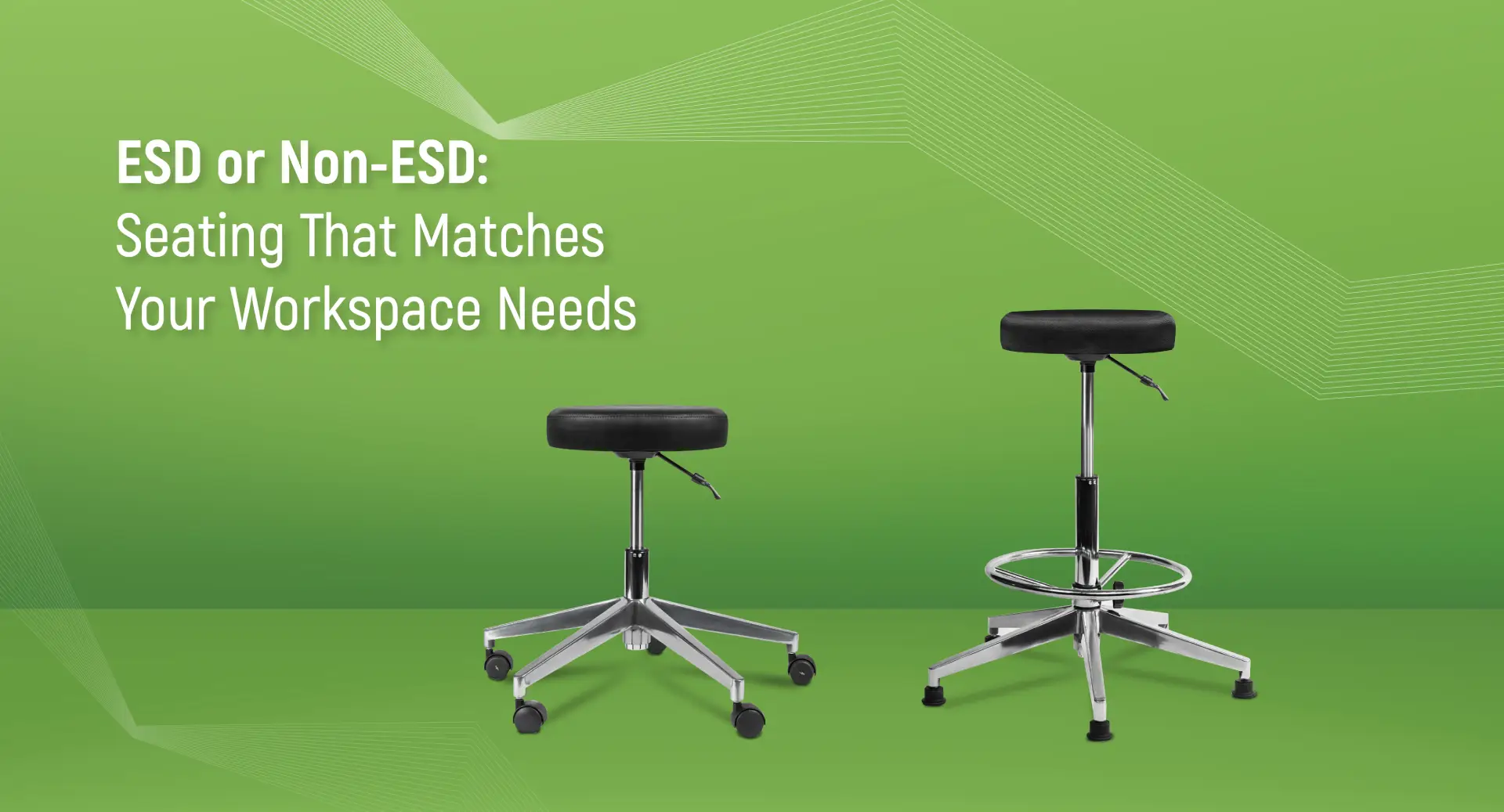
An ESD laboratory stool is designed using conductive or static dissipative materials. These stools safely discharge static electricity through grounded systems, reducing the risk of electrostatic buildup around sensitive electronics. To support specific cleanliness and aesthetic preferences, Messung offers specialised ESD stools in both Leather and PU Material variants.

An ESD stool is commonly used in:
  1. Electronics assembly areas
  2. PCB manufacturing units
  3. Calibration labs
  4. Semiconductor facilities
  5. Battery testing spaces

An ordinary laboratory stool, on the other hand, focuses mainly on comfort, mobility and basic industrial usage. These stools are suitable in workspaces where static discharge is not a major risk.

Many buyers assume ESD seating is always necessary. In reality, the correct choice depends on the actual workspace application.

Workspaces That Benefit Most from ESD Laboratory Stools

Certain industries cannot risk electrostatic discharge. In these environments, an ESD laboratory stool becomes part of the protection system itself.

Workspaces that benefit from ESD safe seating include:
  1. Electronics assembly lines
  2. PCB testing labs
  3. EV battery testing facilities
  4. Instrument calibration benches
  5. Electronics repair stations
  6. Research and development labs
  7. Scientific Laboratories 
  8. Cleanrooms
In these environments, anti-static seating works together with grounded work surfaces and anti-static workbenches to create a complete ESD-controlled workstation.

An ESD laboratory stool for electronics labs helps maintain safe handling conditions during testing, assembly, and diagnostics. This reduces the risk of hidden component damage caused by static discharge.

Messung Workplace Technology designs ESD safe seating for electronics manufacturing environments where reliability and static protection are essential.

Where Non ESD Laboratory Stools Make More Sense

Not every workspace requires static control. In many industrial and laboratory applications, a standard laboratory stool is the more practical option.
Non ESD laboratory stools are commonly used in:
  1. Chemical testing labs
  2. Packaging inspection areas
  3. Mechanical assembly sections
  4. Educational labs
  5. Utility workstations
  6. Sample preparation areas

These spaces benefit more from ergonomic support, flexibility and mobility rather than ESD protection.

Advantages of non-ESD stools include:
  1. Lower initial investment
  2. Flexible movement
  3. Comfortable seating for general tasks
  4. Easier deployment across multiple work areas
 
For businesses trying to balance operational needs with budget planning, understanding where ESD protection is actually required prevents unnecessary spending.

Comfort and Ergonomics Matter in Both Seating Types

Whether you choose ESD or non-ESD seating, ergonomics should never be ignored.

An ergonomic laboratory stool helps reduce fatigue during long work shifts. Proper seating supports posture, improves focus and minimises physical strain.
Important features to look for include:
  1. Adjustable seating height
  2. Stable foot support ring
  3. Durable base construction
  4. Swivel movement
  5. Easy mobility
  6. Comfortable seating surfaces

Modern industrial seating solutions often use PU seating surfaces because they are durable, easy to clean and comfortable during extended use.

Messung Workplace Technology designs laboratory seating systems that focus on both operator comfort and industrial durability.

Cost vs Operational Value in Laboratory Seating

One of the biggest mistakes buyers make is comparing seating based only on purchase cost.
A standard laboratory stool may cost less initially but if it is used inside electronics handling zones, the lack of ESD protection can create expensive problems later.

An anti static stool for laboratory use protects sensitive components from electrostatic discharge. This helps avoid:
  1. PCB damage
  2. Testing inconsistencies
  3. Equipment failures
  4. Product rejection

In environments where electronics safety matters, the operational value of ESD safe furniture is significantly higher than the upfront cost difference.

At the same time, using ESD seating in spaces where static control is unnecessary may increase costs without operational benefit. The key is matching the seating type to the actual workspace function.

Building the Right Seating Setup for Modern Laboratories

Modern laboratories no longer rely on isolated furniture pieces. They are built as integrated work environments.

An effective laboratory seating setup may include:
  1. ESD stool for active electronics handling zones
  2. Laboratory chair for seated precision work
  3. ESD workstation for testing operations
  4. Storage cabinets for tools and accessories
  5. Ergonomic layout planning for operator movement

This ecosystem approach improves both workflow efficiency and operator comfort.

Messung Workplace Technology designs integrated laboratory infrastructure where seating, workstations and storage systems work together as a connected workspace solution.

Choosing Seating Based on Workspace Function, Not Just Furniture Type

The right seating decision should always be based on operational requirements rather than appearance or price alone.

Before selecting a stool, evaluate:
  1. Nature of work being performed
  2. Sensitivity of handled equipment
  3. Operator working hours
  4. Frequency of movement
  5. Compliance requirements
  6. Future expansion plans

For electronics handling and testing environments, ESD safe seating becomes essential. For general industrial and utility spaces, standard laboratory stools may provide the right balance of comfort and practicality.

A well planned seating strategy supports productivity, safety, and long term operational efficiency.

Conclusion

The difference between ESD and non ESD laboratory stools is not just about materials. It is about matching seating to the actual work environment.

When comfort, movement, safety, and application requirements are aligned correctly, seating becomes part of workplace performance instead of just furniture.

An ESD laboratory stool protects sensitive electronics in controlled environments, while non-ESD seating provides flexible and cost-effective support for general industrial tasks. The right choice depends entirely on how the workspace functions.

Messung Workplace Technology designs industrial laboratory seating solutions that combine ergonomics, durability, and application-specific performance for modern laboratories and manufacturing environments.
ESD Range Logo