Electric vehicle manufacturing depends heavily on precision. Every battery module, PCB assembly, motor controller, and charging circuit must be tested accurately before moving into production or field use. Even a minor inconsistency during validation can lead to performance issues later on the road.
This is why the testing environment matters just as much as the testing equipment itself. An ESD safe workstation creates controlled conditions that help engineers perform reliable testing while protecting sensitive electronics from electrostatic discharge. Modern EV testing spaces are now moving toward integrated testing ecosystems that combine anti-static work surfaces, organised storage systems, ergonomic laboratory seating, and modular testing benches.
Messung Workplace Technology designs an integrated testing infrastructure for modern electronics and EV manufacturing environments. Their solutions combine workstations, laboratory furniture, storage systems, and ESD protection into a single workflow-focused setup.
An advanced EV testing lab handles far more than simple electrical checks. Modern electric vehicles rely on complex electronics, including:
These components require stable and organized testing conditions. Engineers need proper cable routing, accessible tools, clean work surfaces, and comfortable working positions during long validation cycles.
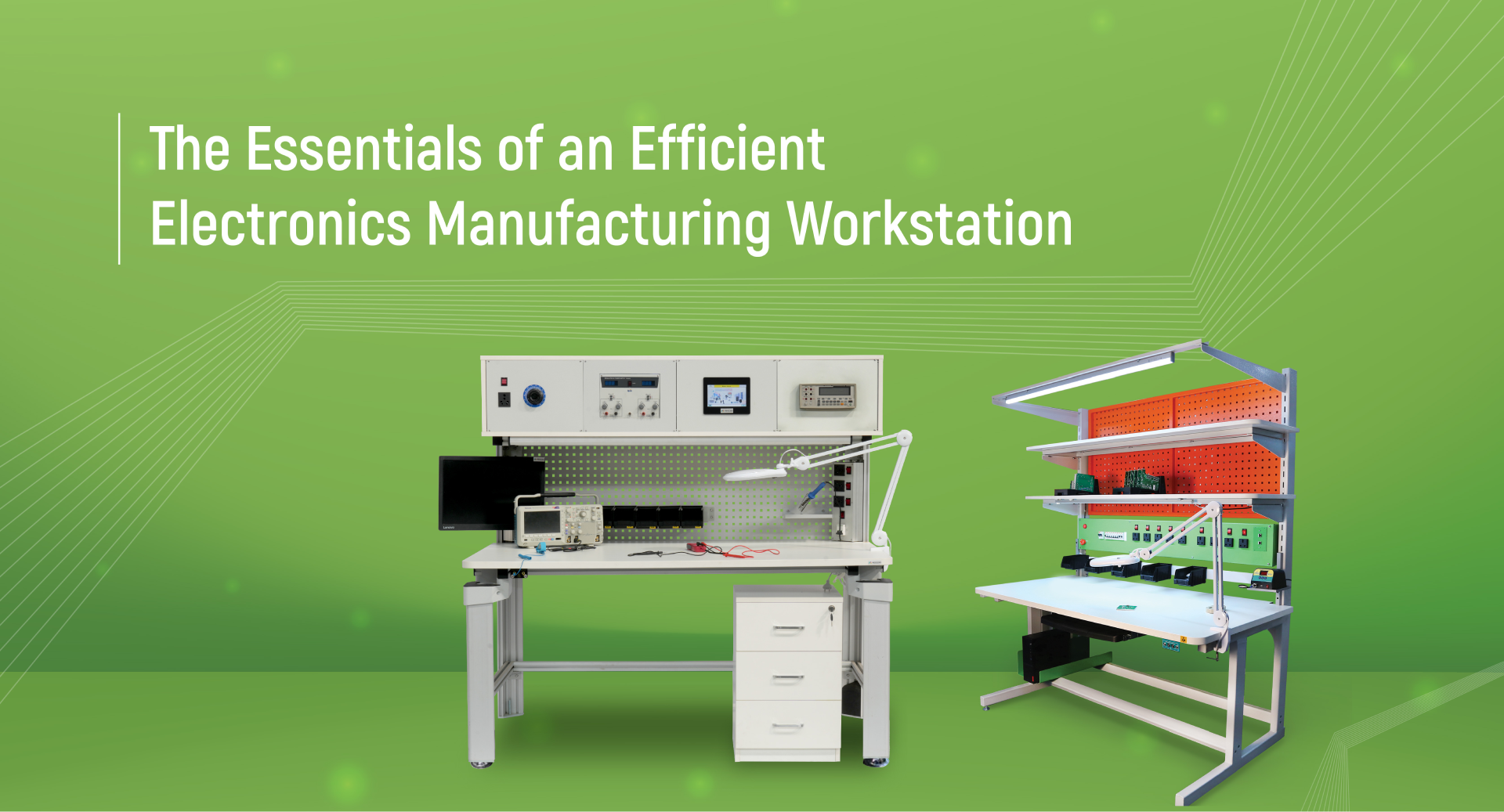
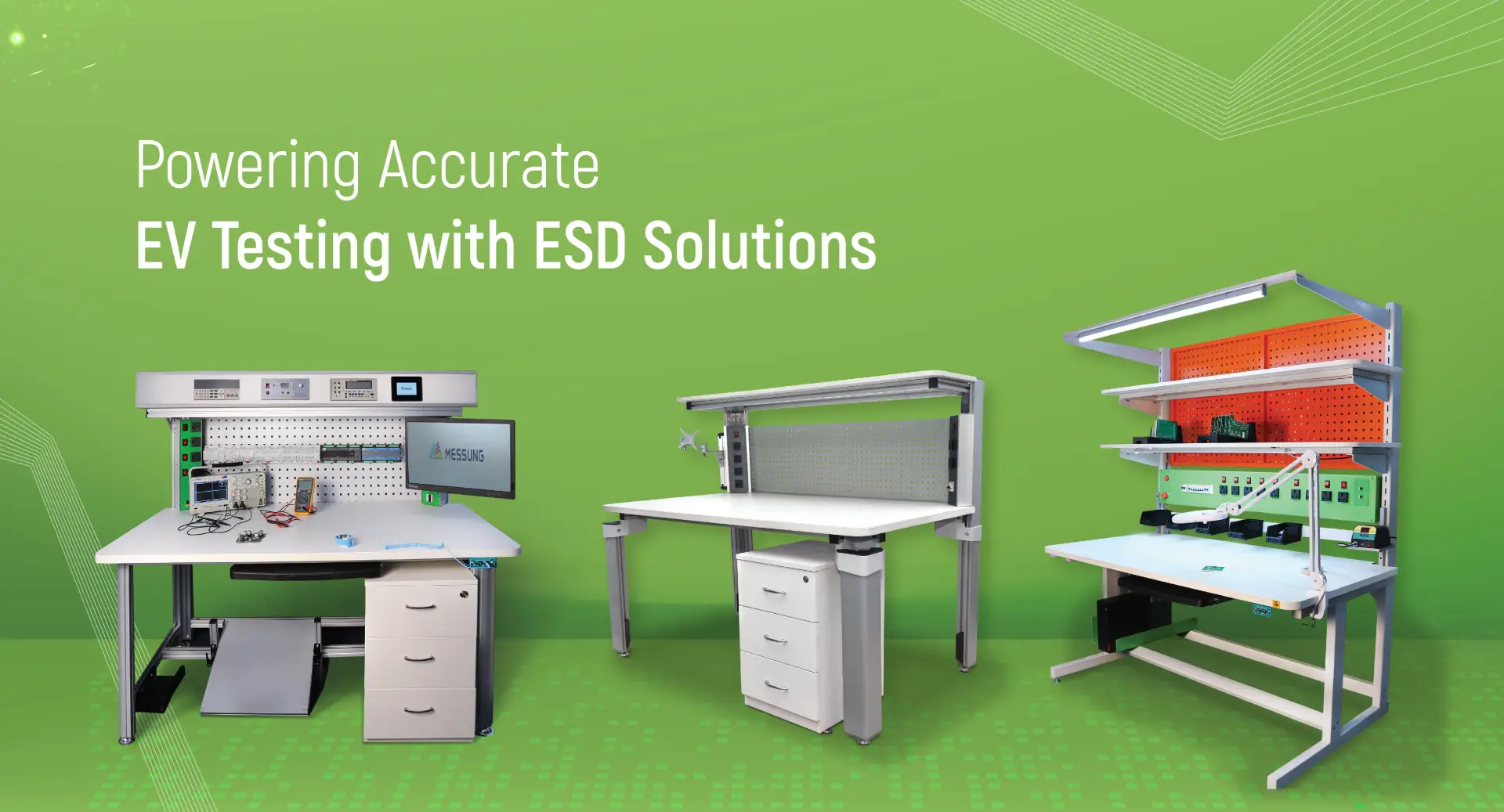
A cluttered testing environment can slow down diagnostics and increase handling errors. This is why modular ESD workbenches are becoming common in EV testing facilities. Features such as integrated lighting, overhead shelving, power access modules, and cable management channels help maintain workflow consistency while reducing interruptions during testing.
Messung Workplace Technology also offers the ESD Table with Instrument Rack, specifically designed to support electrical testing in a more organised and comfortable way. With dedicated space for testing instruments, accessories, and integrated utilities, it helps engineers work more efficiently while maintaining a structured and ergonomic testing environment.
Static electricity is invisible, but its impact on electronics testing is serious. Even a small discharge can affect sensors, chips, connectors, or battery circuitry.
Inside an anti-static workstation, static buildup is controlled through conductive materials and grounded surfaces. Without proper ESD control, testing environments can face:
An anti-static workstation is especially important during EV testing because battery systems and electronic controllers contain highly sensitive components.
Modern ESD testing spaces use grounded worktops, conductive accessories, anti-static surfaces, and ESD safe seating systems to reduce electrostatic risk. This creates stable testing conditions and protects expensive components during handling and inspection.
Testing efficiency is not only about equipment performance. Organization also plays a major role.
In many facilities, engineers lose valuable time due to:
This increases setup delays and extends testing cycles. In high volume EV manufacturing, even small delays can affect overall productivity.
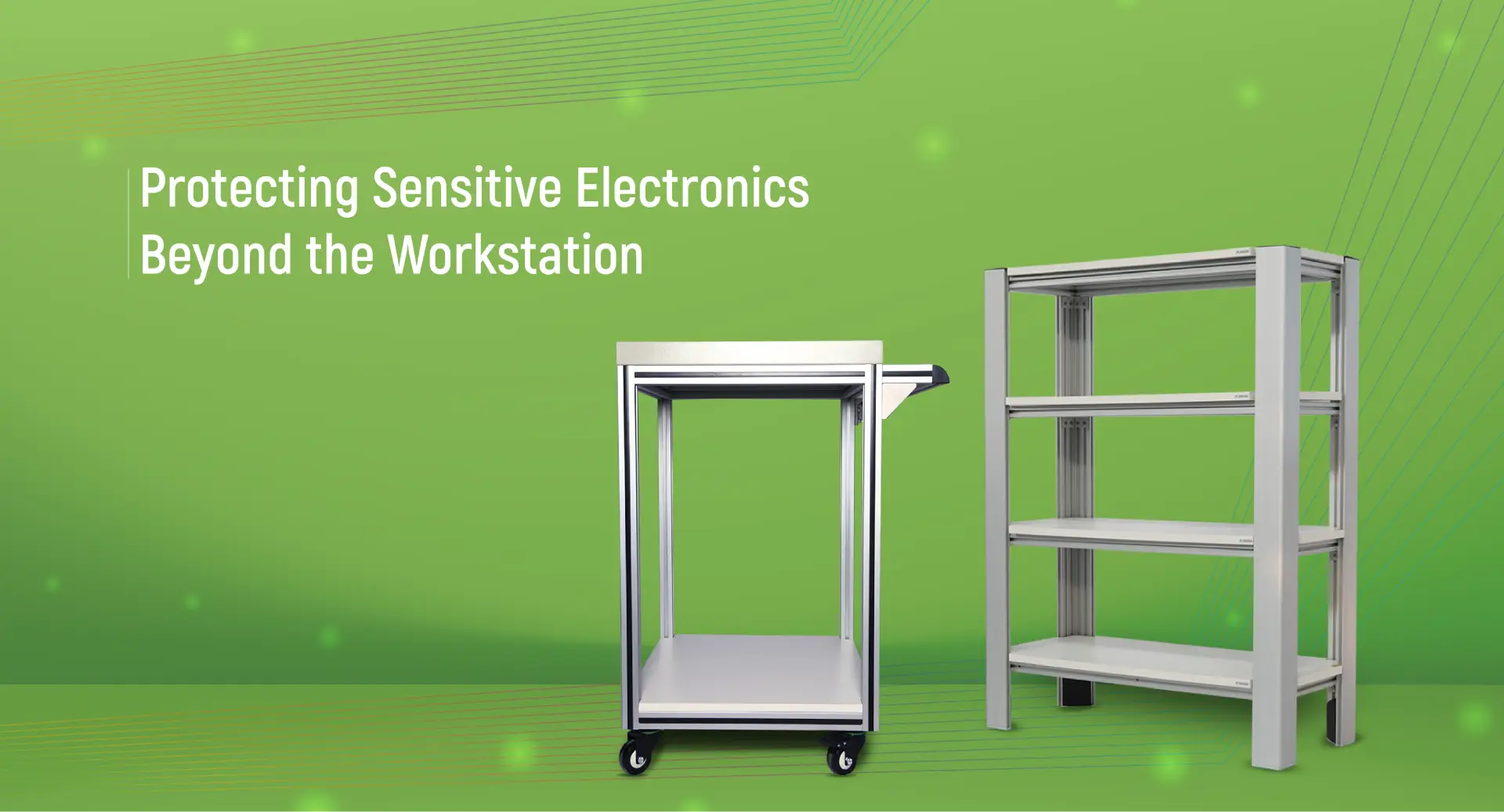
Well planned laboratory furniture improves workflow by creating organised testing zones. ESD drawer cabinets help safely store sensitive electronic components, while industrial storage cabinets keep tools and consumables accessible. Mobile utility trolleys also make it easier to move testing accessories between stations.
A clean and organised workspace helps engineers focus on testing instead of searching for equipment.
EV validation processes often take several hours. Engineers spend long periods monitoring systems, recording measurements, and performing repeated diagnostics.
A poorly designed industrial workstation can create fatigue and reduce concentration over time. This directly affects testing accuracy.
Ergonomic testing environments improve performance by supporting:
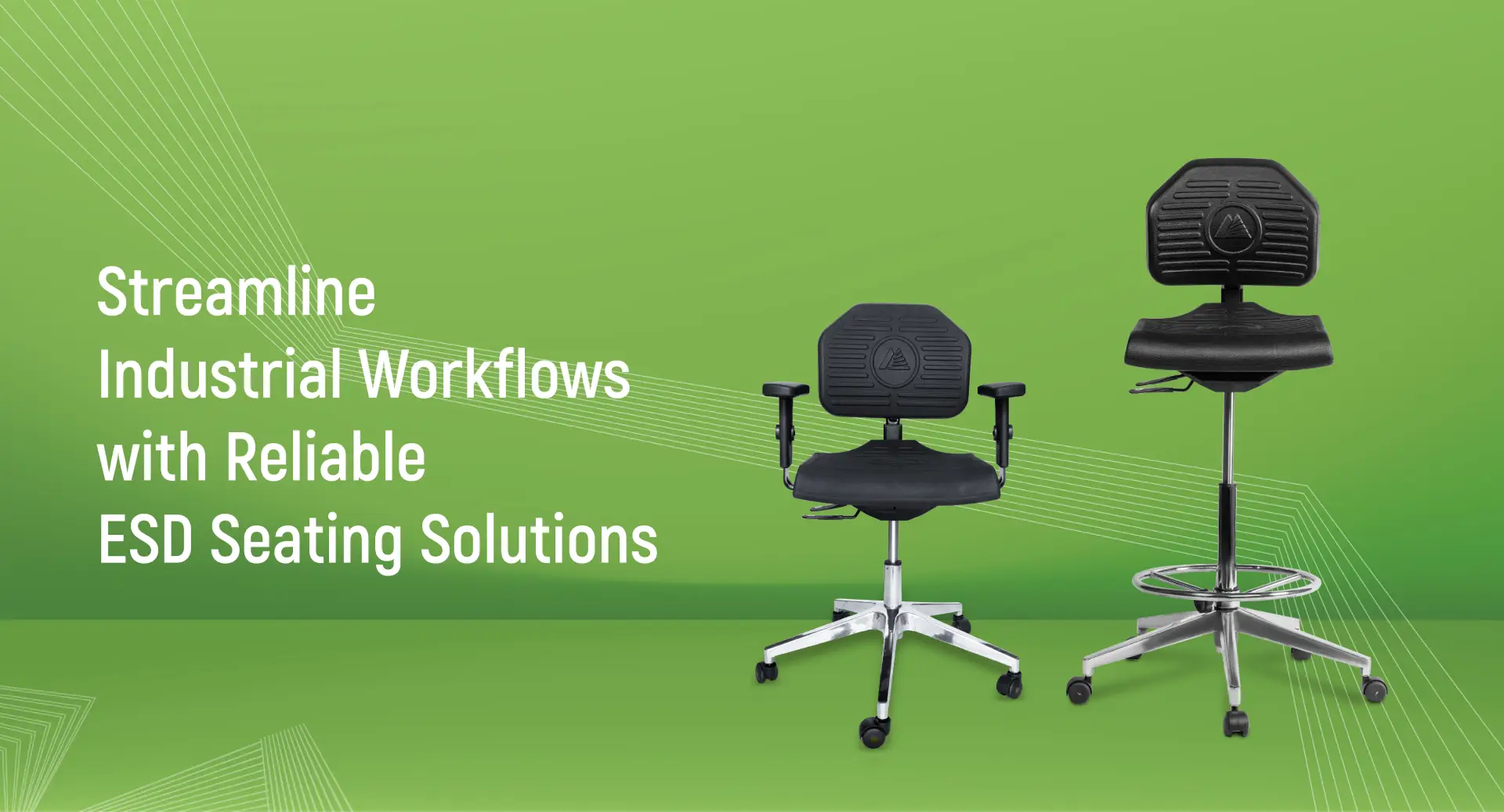
Height-optimised industrial workstations combined with ergonomic laboratory chairs allow engineers to work comfortably throughout long validation cycles. Footrest-supported seating setups also help reduce strain during seated operations.
Reducing operator fatigue helps maintain focus and minimises handling errors during precision testing.
The EV industry evolves rapidly. Manufacturers constantly introduce:
As testing requirements grow, labs need infrastructure that can adapt quickly. A modular ESD workstation provides this flexibility.
Modern workstation systems support expansion through:
Instead of redesigning the entire lab, modular systems allow facilities to scale step by step. This makes expansion faster and more cost-effective.
For EV manufacturers handling frequent technology updates, flexible workstation infrastructure becomes a practical necessity.
An effective ESD lab setup is built as a complete ecosystem rather than a single table.
A modern EV testing environment should include:
Each element supports workflow efficiency and testing reliability. Together, they create an environment where engineers can perform accurate testing safely and consistently.
Messung Workplace Technology designs integrated ESD lab setups that combine workstation infrastructure, storage, seating, and utility management into one connected system for industrial testing environments.
Accurate EV testing depends on more than advanced instruments. The surrounding environment has a direct impact on testing consistency, operator efficiency, and component protection.
A well-designed ESD workstation ecosystem helps reduce electrostatic risk, improve organisation, and support engineers during long validation cycles. As EV manufacturing continues to grow, investing in integrated ESD safe infrastructure becomes an important step toward long-term operational reliability and testing accuracy.
For modern EV testing labs, the right workstation setup is not just furniture. It is part of the testing process itself.