When a manufacturing facility is being planned or upgraded, workstation selection is often treated as a basic furniture decision. A table is selected, storage is added later, and ESD protection is considered only after an issue appears on the production floor.
That approach can create unnecessary cost, poor workflow, and risk to sensitive components.
The choice between ESD vs non ESD workstations should be based on the work performed at each stage of the process. Some areas need controlled static protection. Others need strong, durable, ergonomic industrial workstations without ESD features.
The right setup depends on what is handled, how operators work, where materials move, and how the facility may grow in the future. Explore Messung Industrial and ESD Workstations for manufacturing facilities before finalising your workplace layout.
An ESD workstation is designed for areas where static sensitive electronic components are handled. It helps control electrostatic discharge, which can affect components such as bare PCBs, integrated circuits, sensors, controllers, connectors, and semiconductor devices.
Static electricity is not always visible or noticeable to the operator. However, it can affect sensitive electronics during assembly, testing, inspection, repair, or packing.
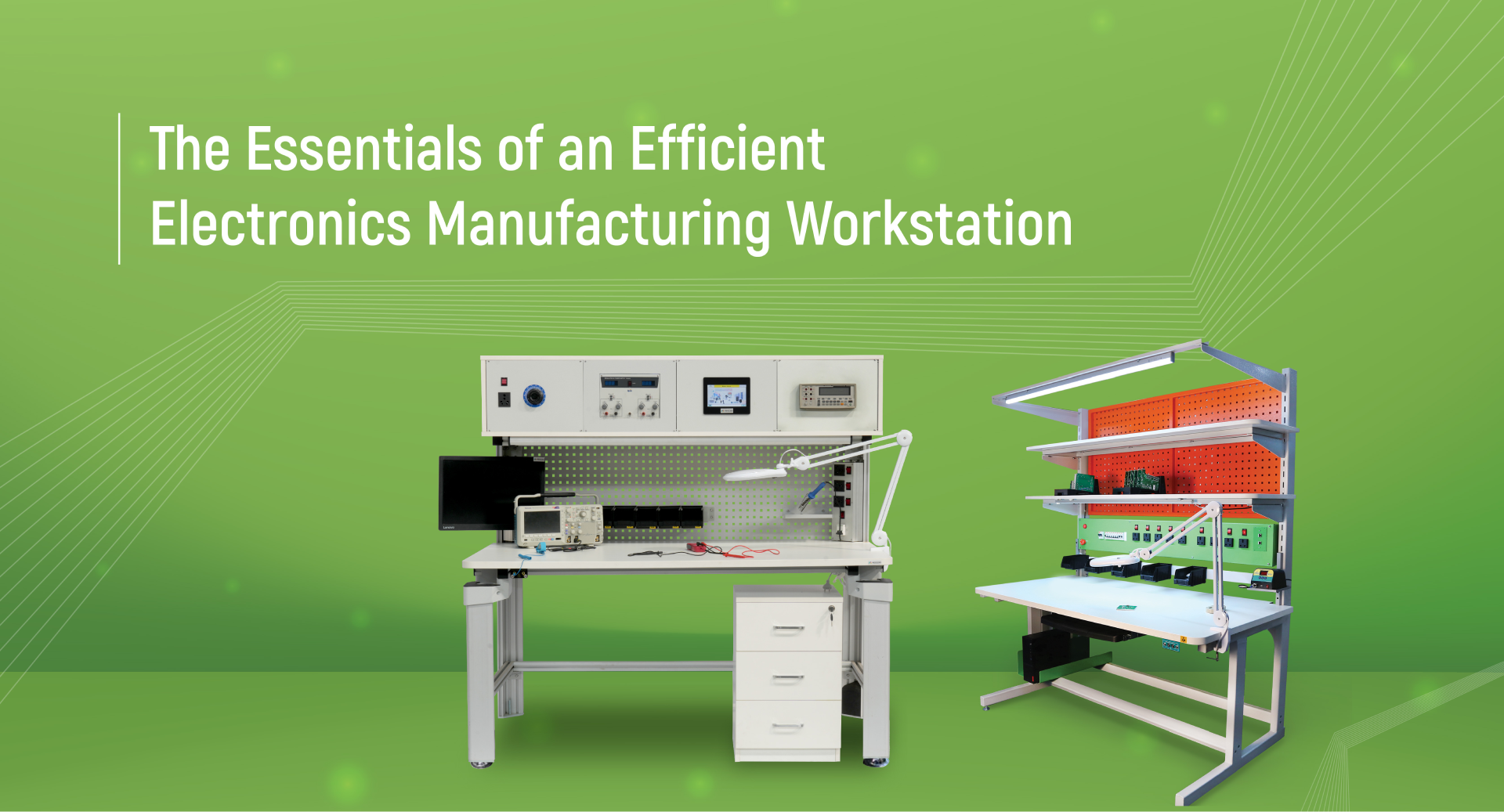
An ESD workstation is not simply an ESD table. It is a complete controlled setup where the work surface, grounding point, seating, accessories, storage, and operator practices work together.
An ESD safe workstation generally includes a static dissipative work surface and a grounding arrangement that allows static charge to move safely away from the work area.
Compatible ESD furniture is equally important. ESD chairs, ESD stools, ESD drawer cabinets, and ESD trolleys help maintain continuity across the workstation environment.
For example, if an operator is working on a PCB assembly bench with an ESD workbench but uses a regular chair, the workstation may not provide the level of control required for sensitive handling.
Explore Messung ESD workplace solutions for electronics manufacturing, testing, repair, and inspection environments.
A non ESD workstation is an industrial workstation designed for applications where exposed static sensitive components are not handled.
Non ESD does not mean lower quality or basic furniture. These workstations may still require high load capacity, strong frames, storage, utility integration, lighting, ergonomic seating, and customised accessories.
They are suitable for manufacturing activities where the main requirement is process efficiency, durability, operator comfort, and organised material movement.
A non ESD industrial workbench may be the right choice for mechanical assembly, packaging, cable harnessing, documentation, tool preparation, or handling products that are already enclosed.
ESD workstations are important where sensitive electronic parts are exposed during the process.
Typical applications include PCB assembly, SMT rework, electronics testing, calibration, inspection, repair, R and D labs, EV electronics testing, battery management system assembly, and semiconductor related work.
In these areas, static discharge can affect the reliability of components. Sometimes the impact is immediate. A component may fail during testing. In other cases, the impact may appear later as intermittent performance or reduced product life.
An ESD workstation for electronics manufacturing helps create a controlled environment around the operator and the product. It supports better handling discipline and reduces the risk of accidental static exposure.
Not every stage in a manufacturing facility needs ESD protection.
Non ESD workstations are suitable for mechanical assembly, final packing of enclosed products, cable preparation, tool assembly, material preparation, quality documentation, and support operations.
For example, a workstation used for fitting a metal enclosure, assembling mechanical brackets, or packing a finished product may need a strong industrial workbench with storage and ergonomic support. It may not need an ESD safe workstation.
Using ESD furniture in every area can increase investment without adding operational value. The objective should be to apply ESD control where the process requires it.
The main difference is the type of work being performed.
An ESD workstation is designed to support static control. It includes ESD safe surfaces, grounding provisions, compatible seating, and suitable accessories. It is used where sensitive electronics are exposed.
A non ESD workstation is designed for industrial performance, durability, ergonomics, and workflow efficiency. It is used where static sensitive electronics are not being handled.
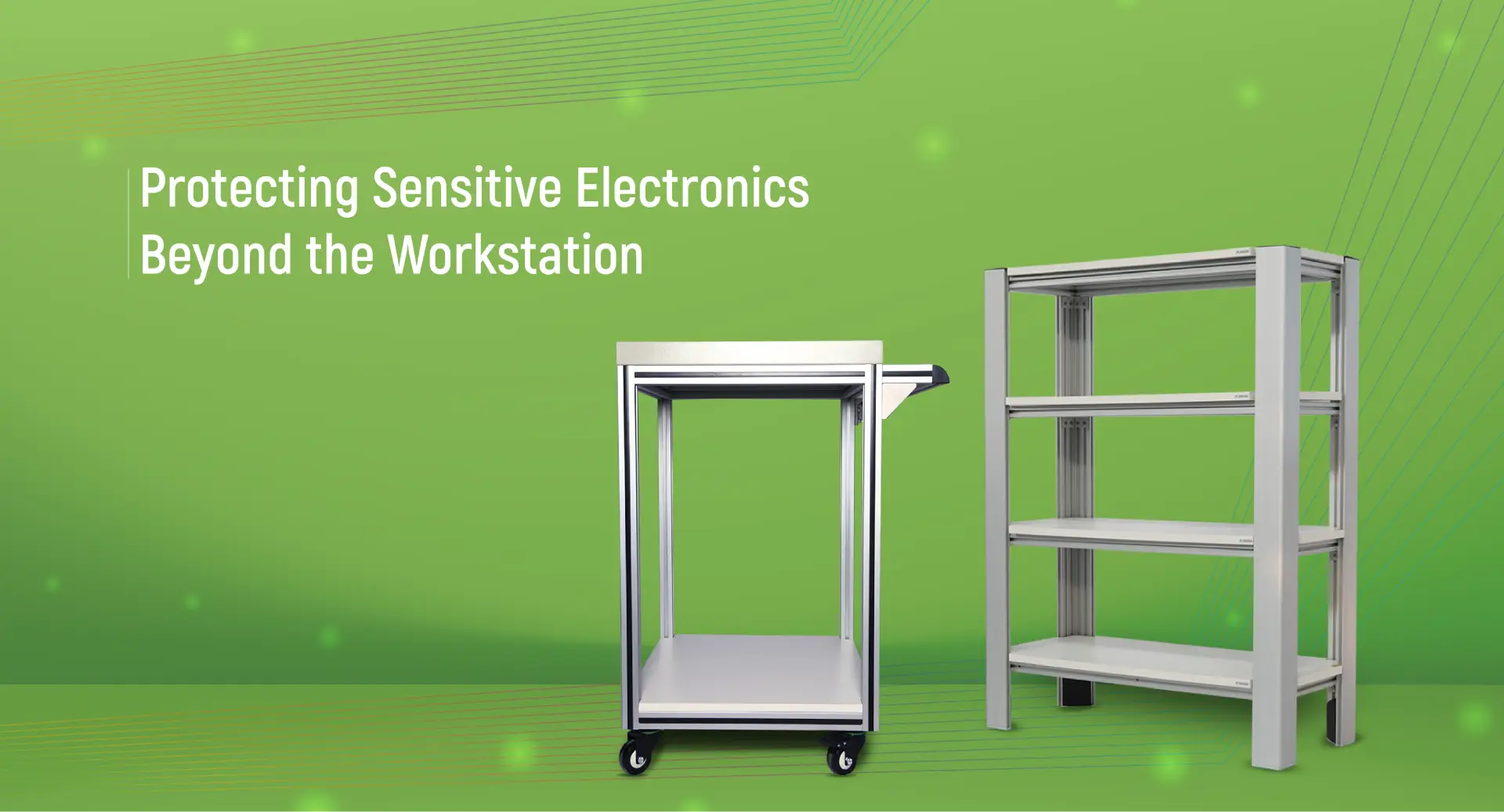
The difference also affects storage and material movement. ESD sensitive components should be kept in ESD drawer cabinets or moved using an ESD trolley. General tools, fixtures, packaging materials, and mechanical parts may be stored in industrial storage cabinets or moved using standard industrial trolleys.
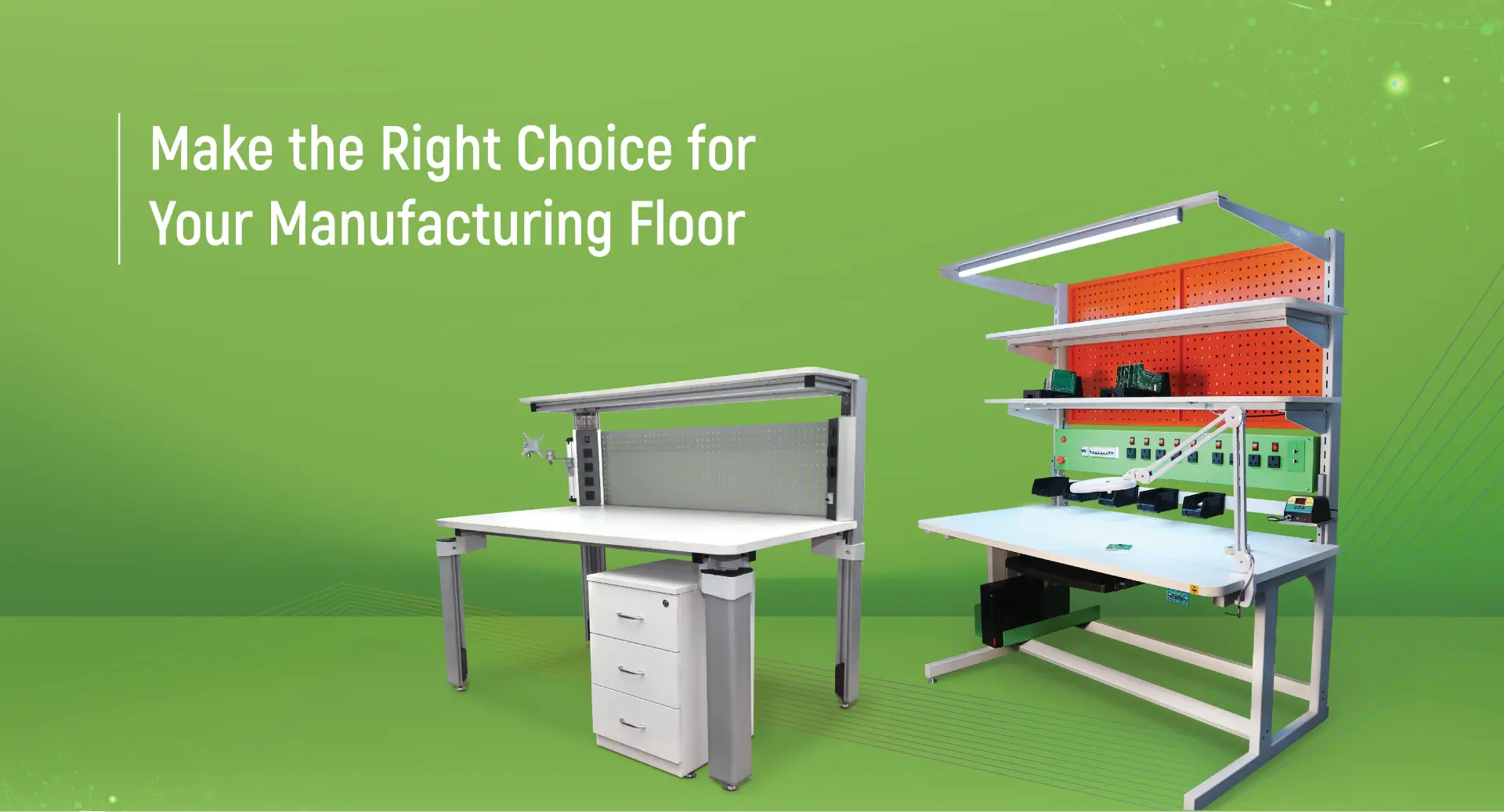
Both workstation types can be modular. Both can include shelves, drawers, power access, lighting, tool rails, monitor arms, and storage systems. The key is selecting the correct configuration for the application.
Many manufacturing facilities have more than one type of operation under the same roof.
An electronics production line may include PCB assembly, testing, mechanical assembly, final inspection, packing, and dispatch. Each stage has different requirements.
The PCB assembly and testing areas may need ESD workstations. Mechanical assembly may need heavy duty industrial workbenches. Packing may need a packaging station with storage for cartons, labels, and finished goods.
A mixed workstation plan allows the facility to invest correctly. It avoids over specification in low risk areas while ensuring proper protection in ESD critical zones.
This also helps create clearer work zones. Operators understand where ESD handling is required and where general industrial work can take place.
The best workplace layouts begin with a process study.
The study should examine operator movement, product flow, tool usage, component storage, inspection stages, testing needs, available floor space, and future expansion plans.
It should also identify where materials enter the workstation, where they are stored, and where they move after the task is complete.
For ESD controlled areas, planning should include grounding arrangements, ESD seating, storage, trolleys, and operator access. For non ESD areas, the focus may be on load capacity, utility access, tool storage, mechanical setup and ergonomics.
A properly planned layout reduces unnecessary walking, searching, bending, and material handling. It also supports better housekeeping and more consistent work practices.
One common mistake is using a regular industrial table in an ESD critical area and adding only an ESD mat. An ESD setup needs more than a mat. The work surface, grounding, seating, accessories, and storage should support the same objective.
Another mistake is assuming every workstation must be ESD safe. This may increase cost without improving the process.
Some facilities also overlook storage. Sensitive electronics are handled carefully on the workbench but then placed in regular drawers or moved on a non ESD trolley and place in the storage rack. This can break the protection chain and lead to component damage.
Ignoring future expansion is another issue. A fixed setup may work today but become restrictive when product volumes increase or a new process is added.
Messung Workplace Technology provides ESD and non ESD workplace systems for manufacturing, laboratories, electronics assembly, testing, inspection, and industrial operations.
The range includes industrial workstations, ESD workstations, laboratory chairs, ESD chairs, laboratory stools, industrial storage cabinets, ESD drawer cabinets, industrial trolleys, ESD trolleys, packaging stations, FIFO storage racks, server rack cabinets, and customised workplace infrastructure.
The approach begins with understanding the customer process. Operator movement, material flow, ESD requirements, utilities, storage, and future growth are studied before a solution is configured.
This helps create workplace systems that support actual operations instead of forcing teams to adjust to generic furniture.
The right question is not whether ESD workstations are better than non ESD workstations. The right question is which setup is suitable for each stage of your manufacturing process.
ESD workstations are essential where sensitive electronics are handled. Non ESD industrial workstations are ideal where strength, ergonomics, storage, and workflow efficiency are the main requirements.
When each zone is planned around the work being performed, the facility becomes safer, more organised, and easier to scale. Explore Messung workplace solutions for ESD and non ESD manufacturing environments and build a workspace around your actual process flow.
Yes. Most facilities require both. ESD workstations are used where static sensitive components are exposed. Non ESD workstations are used where static control is not required.
No. An ESD mat is only one part of the setup. The work surface, grounding, seating, accessories, storage, and handling practices should work together.
Yes, if the electronic product is fully enclosed and no static sensitive components are exposed. The decision should be based on the actual process stage.
Yes. ESD workstations can be configured with shelves, drawers, lighting, power access, monitor arms, tool rails, storage modules, and other accessories based on the application.