An operator is inspecting a PCB at a regular table. An ESD mat covers the surface, but the chair is not ESD safe, the trolley is standard and no managed grounding point is visible. Important gaps remain.
An ESD safe electronics manufacturing workstation is not created by adding one ESD accessory. The work surface, grounding, seating, storage, utilities, material movement and operator practices must function as one controlled system.
Messung Workplace Technology provides integrated ESD workplace solutions for assembly, testing and inspection. Teams can explore Messung ESD workstation solutions while planning the process.
What should an ESD workstation include, and how should its components work together?
An ESD workstation is a controlled work area designed to reduce electrostatic risk while sensitive electronic components are assembled, inspected, tested or repaired. It combines an ESD safe work surface, grounding provisions, compatible furniture, accessories and correct working practices.
It may be used for PCB assembly, inspection, testing, calibration, repair, EV electronics, control panel electronics and research laboratories. The term anti static workstation is also used, but the system involves more than a table.
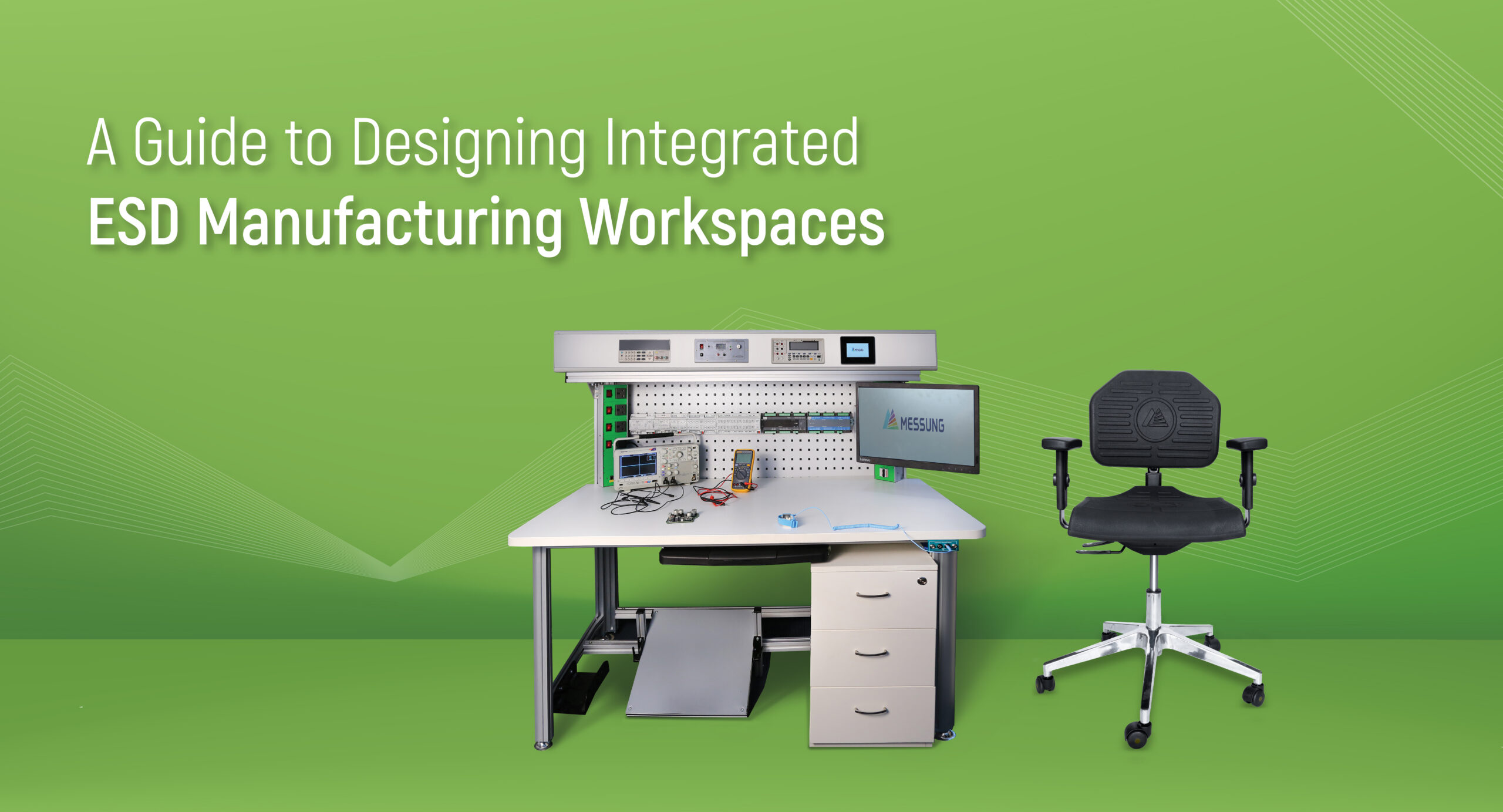
An ESD table or ESD workbench is one component. An electronics assembly workstation is the complete environment, including the worktop, grounding, ESD furniture, storage, trolley, lighting, utilities and operator practices.
The workstation should be designed around the task because assembly, inspection, testing and repair require different tools, movements, storage and utilities.
Planning should consider incoming material, tools, operator posture, the next process stage and temporary storage for sensitive items.
Frequently used tools and components should remain within a comfortable reach zone. A PCB assembly workstation should guide material from incoming storage to assembly, inspection and the next stage.
An ESD workstation should use a surface designed to dissipate electrostatic charge in a controlled manner while supporting the task.
The surface should provide suitable size, strength, stability and durability. ESD HPL work surfaces are used across selected Messung ranges. Dimensions and load requirements should match the application.
An ESD workstation requires a planned grounding path that connects compatible elements to an approved common grounding arrangement.
The plan may include grounding points, wrist strap connections, work surface grounding, compatible seating and suitable storage or mobility solutions. Workstation grounding should be verified by the facility technical team, with checks following the approved ESD programme.
No. An ESD mat alone does not create a complete ESD workstation.
A regular chair, standard trolley, unsuitable drawer or unmanaged grounding path can leave gaps in an ESD controlled area. A complete ESD safe workstation needs compatible components and correct operator practices.
The components create the physical controls, while operator practices determine how those controls are used.
Ergonomics helps operators maintain comfortable posture, clear visibility and controlled movement during repetitive assembly and testing.
The design should consider height, posture, reach zones, foot support, task visibility, chair adjustment and leg space.
An ESD chair suits longer seated assembly, testing and precision work requiring back support. An ESD stool can suit shorter tasks, higher surfaces and frequent posture changes.
Messung ESD chairs and stools include height adjustment and ESD compatible options. Teams can review ESD chairs and stools for workplace ergonomics.
Power, lighting and equipment access should be integrated according to the task so operators do not depend on loose extensions or poorly routed cables.
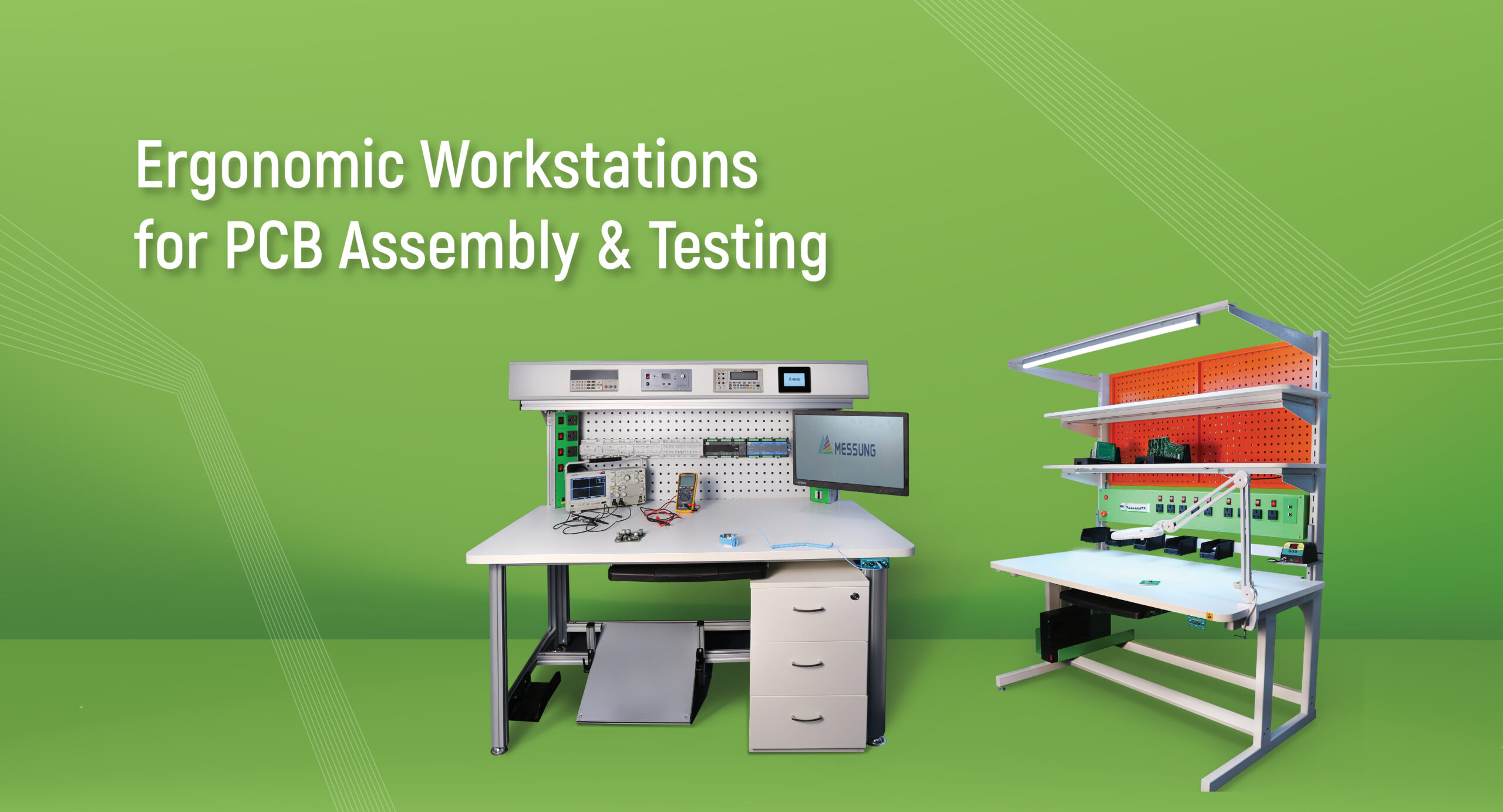
The setup may include electrical mounting panels, sockets, switches, MCB provisions, emergency switching where specified, fixed power supplies, monitor arms, keyboard trays, magnifying equipment, task lighting and cable management.
Selected Messung systems include electrical mounting provisions, lighting and configurable shelving.
Tools and components should be stored close to the point of use without creating clutter or interfering with the ESD controlled area.
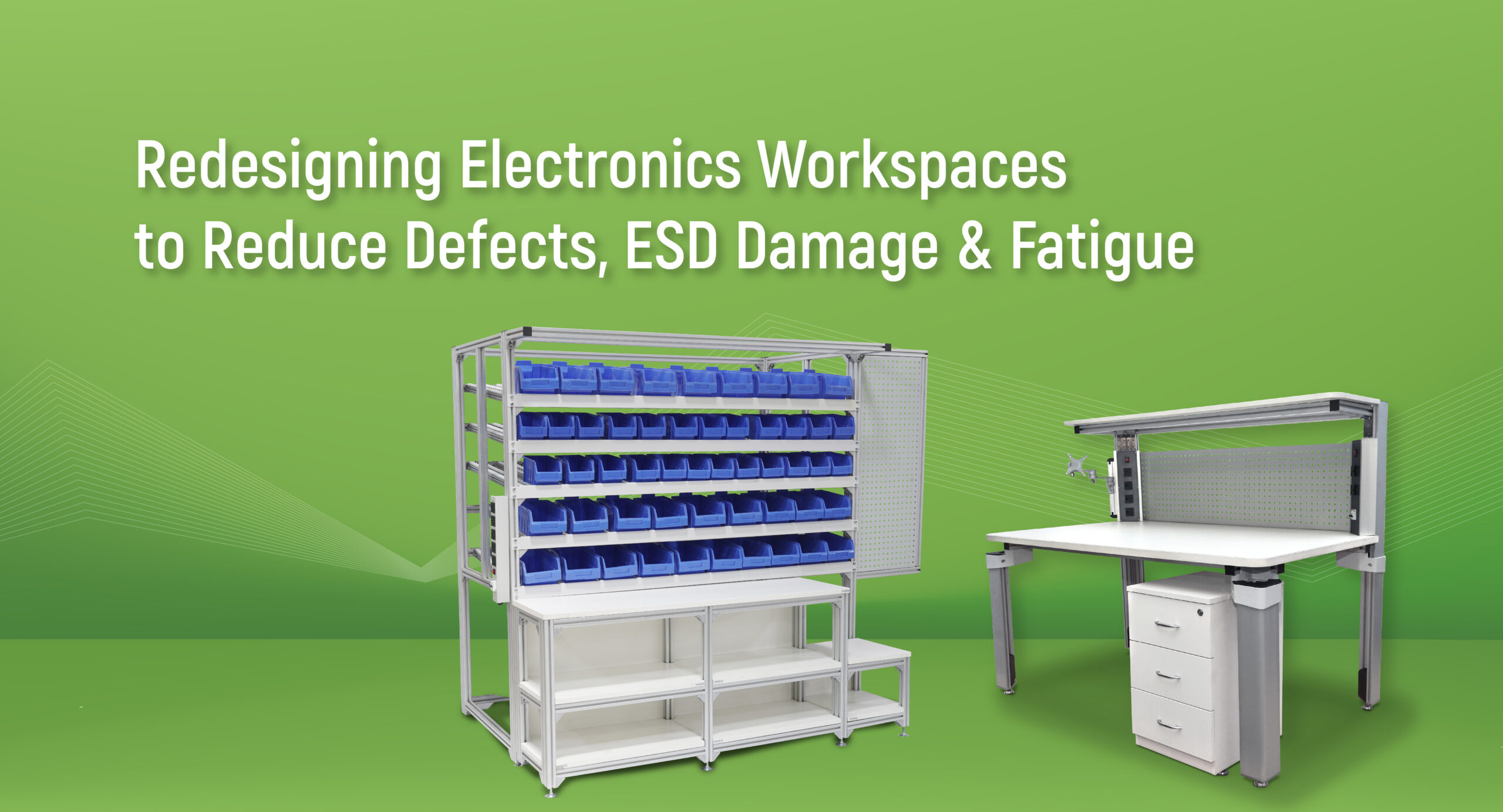
Useful options include ESD drawer cabinets, adjustable shelves, component bins, tool panels and instrument racks. Sensitive components should not move into unsuitable storage.
ESD drawer cabinets help keep sensitive components organised and accessible while supporting controlled handling. They remain one part of the wider ESD system.
Sensitive components should move through suitable ESD compatible mobility solutions rather than standard trolleys or improvised containers.
ESD trolleys and mobile test benches can support movement between assembly, inspection and testing. Messung AFM MTB mobile test benches are available with ESD shelves or drawer configurations and use ESD castors. Teams can review ESD mobile test bench solutions.
A modular ESD workstation can be adjusted or expanded when products, tools, operators or testing requirements change.
Modular planning may include adjustable shelves, accessory panels, monitor arms, instrument mounting, storage and lighting. Changes should still be reviewed against load, ESD and process requirements.
Before use, manufacturers should verify the work surface, grounding, seating, storage, utilities, lighting, movement and inspection requirements as one complete setup.
ESD Workstation Setup Checklist
This checklist does not replace a qualified ESD audit or technical validation.
ESD workstation planning should consider recognised control requirements and the standards followed by the manufacturing facility.
Approved Messung literature for several workstation ranges references IEC 61340 5 1 and ANSI ESD S20.20.2021. Relevant products specify an ESD range of 10⁶ to 10⁷ ohms. Specifications should be confirmed for the selected model.
The most common mistake is treating ESD protection as separate accessories instead of one controlled system.
Other mistakes include using only an ESD mat, non ESD seating, standard trolleys, unsuitable storage, late utility additions, poor cable management, distant tools, ignored future changes and installation without verification.
Messung Workplace Technology supports assembly, testing, inspection and industrial applications with integrated ESD workplace systems.
The solution can include workstations, adjustable height tables, seating, storage, mobile test benches, electrical provisions, lighting and ergonomic accessories.
Choosing an ESD workstation manufacturer should begin with the process, movement, material flow, utilities, available space and future requirements. Good industrial workstation design treats the workstation as part of the manufacturing system.
The operator from the opening example had an ESD mat, but the chair, trolley, cables and grounding arrangement had not been planned as a complete system.
Designing an ESD safe electronics manufacturing workstation requires more than selecting an ESD worktop. The work surface, grounding, ergonomics, seating, storage, material movement, utilities, lighting and operator practices must work together.
A workstation designed around the real process supports controlled handling, organisation and future flexibility.
Planning a new electronics manufacturing line or reviewing an existing ESD setup? Explore Messung ESD workstation solutions and contact Messung Workplace Technology about a workspace designed around your process, operators and production requirements.
An ESD workstation is a controlled work area designed to reduce electrostatic risk while sensitive electronics are assembled, inspected, tested or repaired.
No. The work surface, grounding, seating, storage, mobility solutions and operator practices should work together.
An ESD chair is required when seating forms part of the facility ESD controlled system. The exact requirement depends on the process and approved programme.
Yes. Dimensions, shelves, utilities, lighting, storage and accessories can be configured according to the application and selected system.
An ESD table is one component. An ESD workstation includes grounding, seating, storage, utilities, material handling and operator practices.
It should be checked according to the facility ESD audit and verification schedule. Frequency depends on the process, usage and internal quality requirements.